
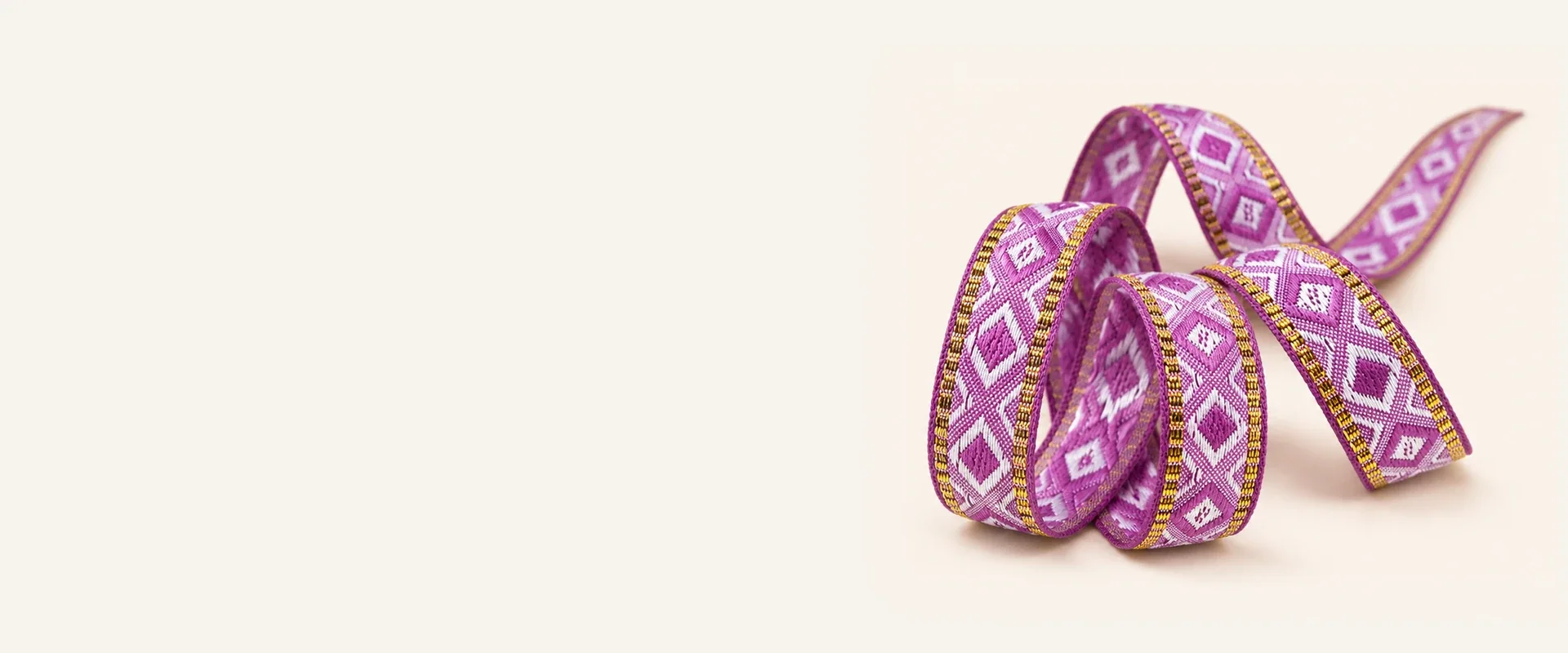
Custom Jacquard Ribbon
We weave names, emblems and borders into a repeat. The pattern can run along a garment seam or leave one full logo on each cut piece.
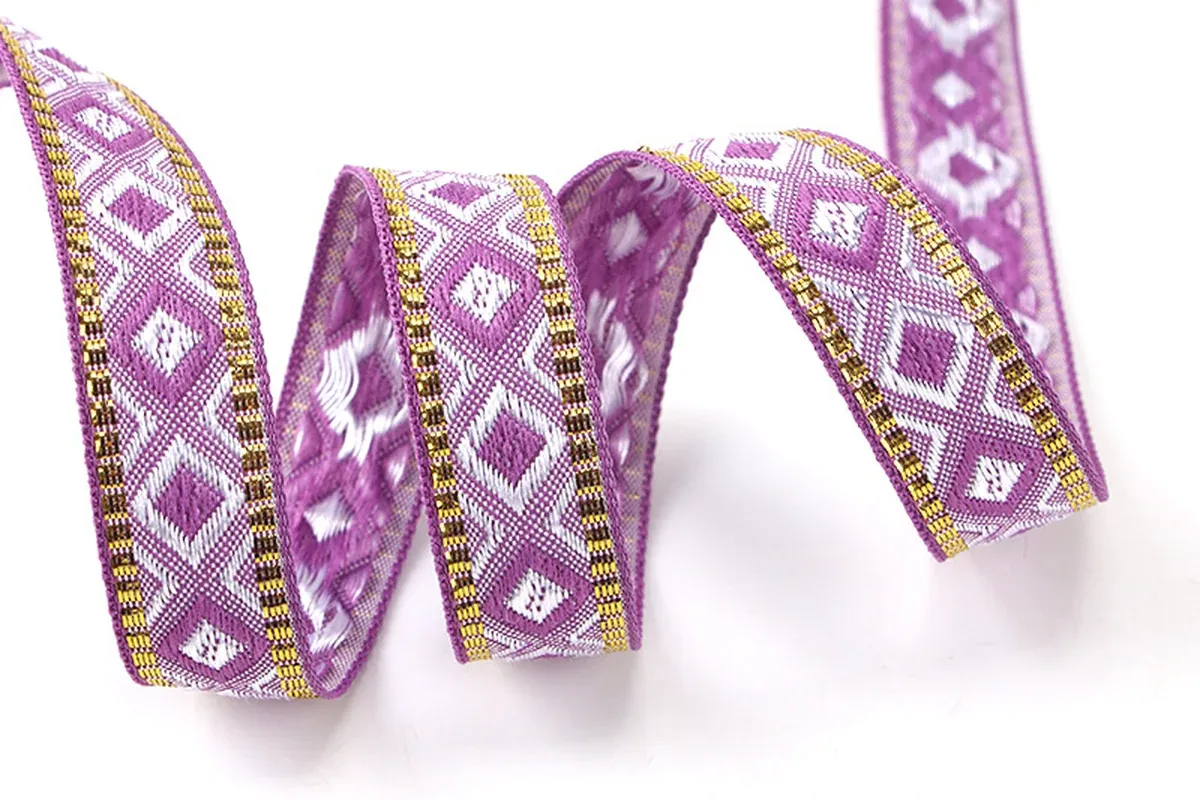
Patterns built into the ribbon
- A name can run lengthwise or sit between repeating symbols.
- A border can run along one edge or fill the band.
- Cotton, polyester and blended yarns give the trim different textures.
- Plain gaps between emblems leave room to cut or sew.
- Ribbon orders start at 50 meters.
Garment edge or individual badge?
A small pattern can repeat around a garment edge. For a brand tab, we center one emblem between two plain gaps so cutting and sewing leave the mark intact.

Continuous border
A stripe or geometric pattern can repeat around a hem.

Brand lettering
A second yarn color forms the brand name in the weave.

Spaced emblems
An icon with plain ribbon on both sides suits ties or cut trim.
Tonal patterns
Close yarn colors bring out the pattern's texture without a sharp contrast.

Seam margin
A plain strip beside the design leaves room to attach the trim.

Reverse
Yarns can cross behind a motif, so the back may look different.
Woven borders, logos and lettering
A border can follow a long edge. Spaced logos can sit at the center of each tie or label.
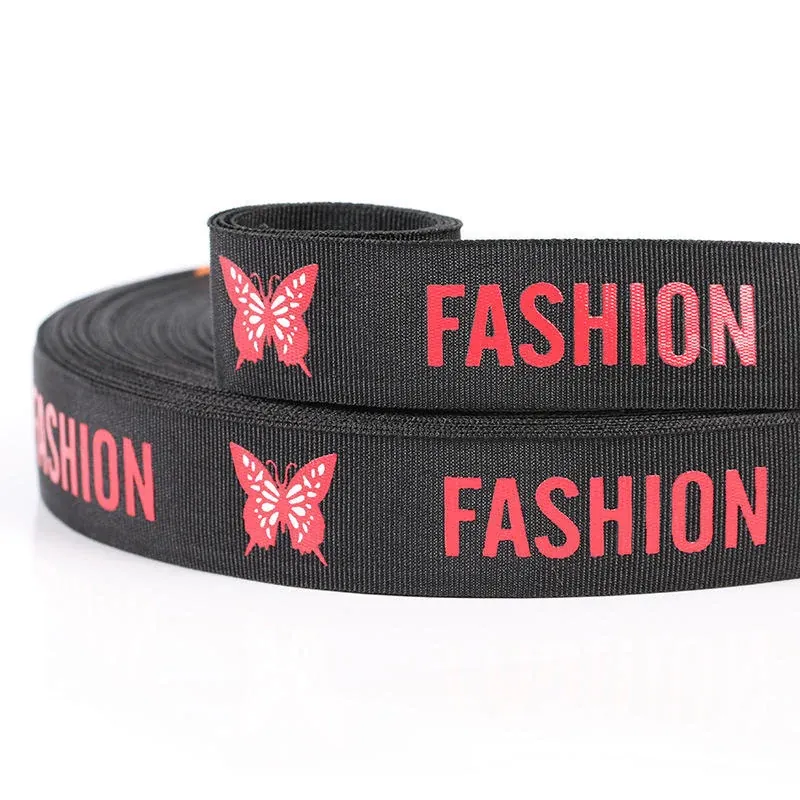
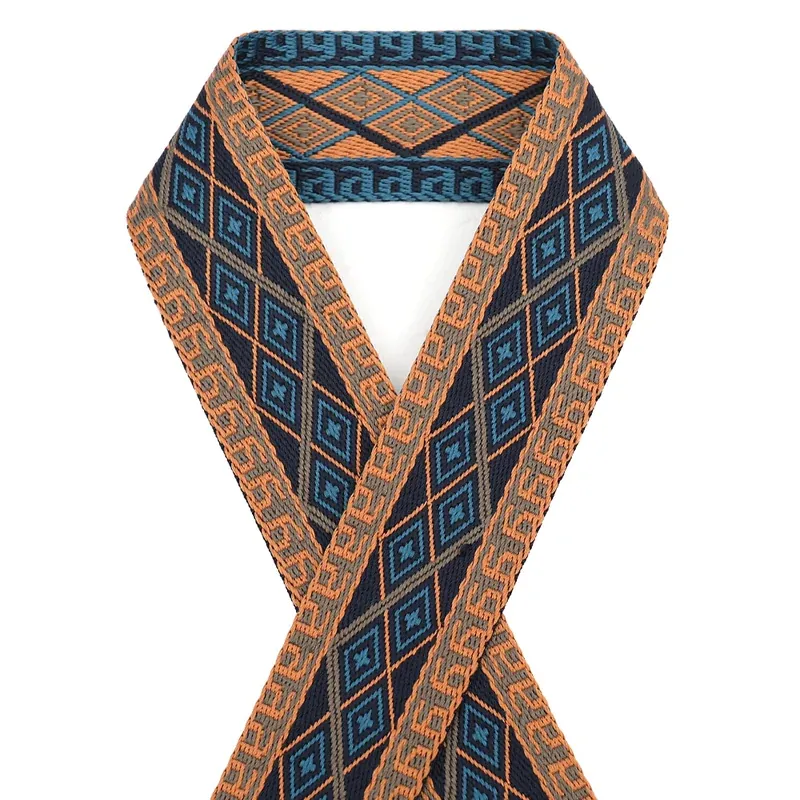
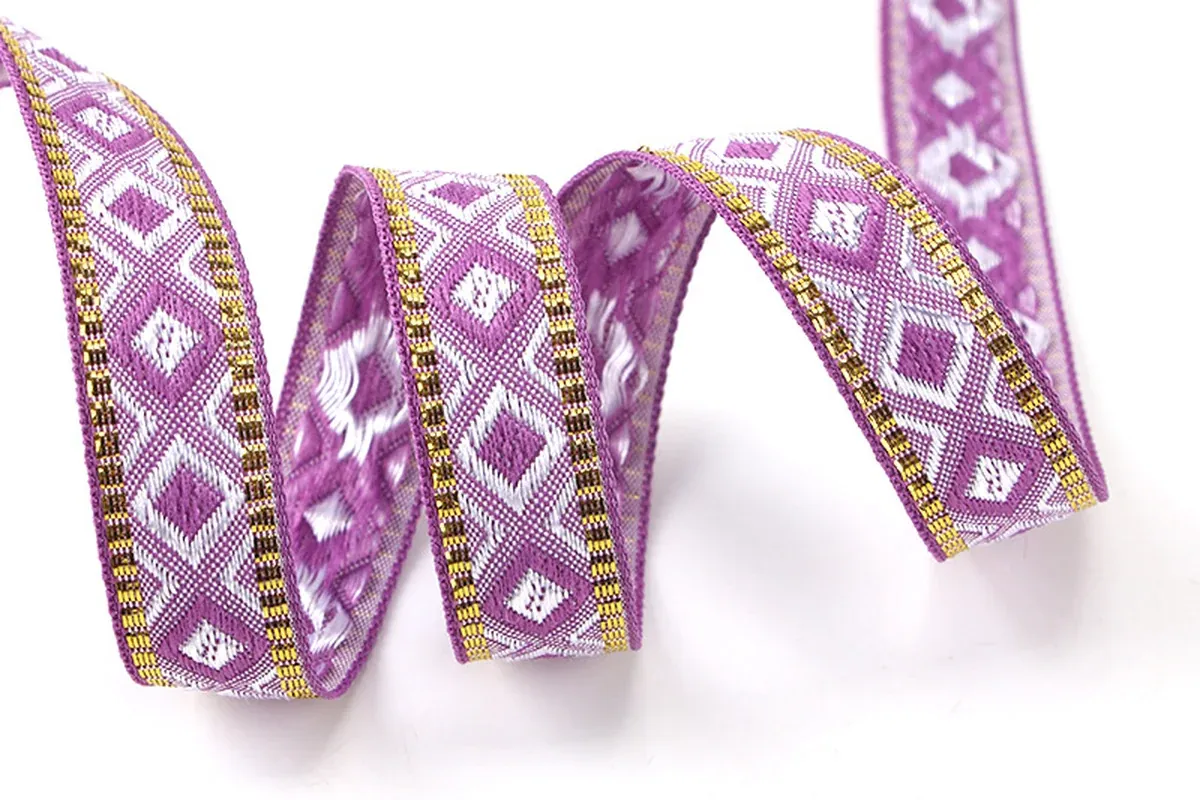
Woven logos and borders
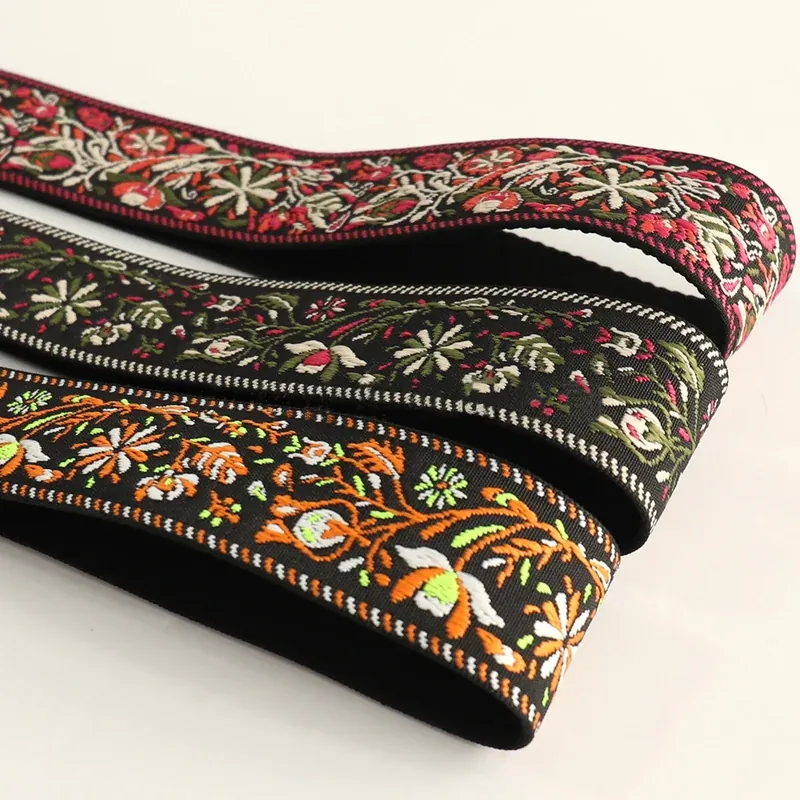
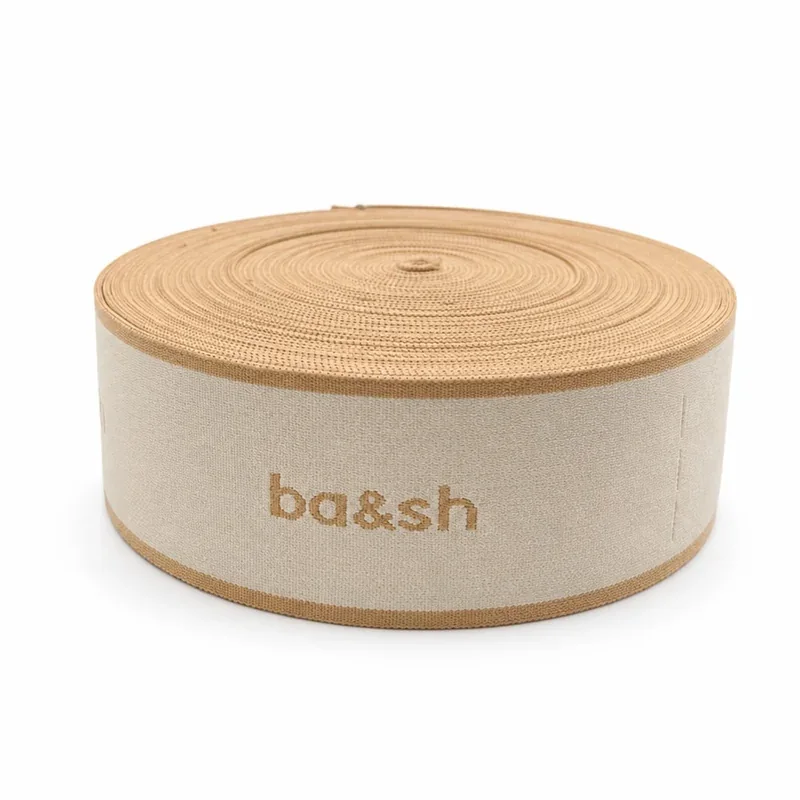
A border can run the length of a seam. Spaced logos leave plain ribbon between marks.
-
Jacquard Ribbon
A continuous geometric detail runs along the ribbon edge. -
Woven Logo Ribbon
A small emblem can repeat at set intervals on bag or garment trim. -
Woven Lettering Ribbon
We can center the letters or move them to leave room for a seam. -
Patterned Jacquard Ribbon
A repeating motif can fill the width or frame a plain central stripe.
Band width and repeat length
Band width limits letter height. Repeat length sets the distance to the next group of letters. We can change one without scaling the whole design.
-
Visible band
A plain sewing margin leaves the stripe or wording visible. -
Word length
A long name can run down the band at the intended letter height. -
Repeat origin
A letter, icon or registration mark can show where each repeat starts. -
Cut allowance
Plain ribbon between designs leaves a margin on each cut piece.
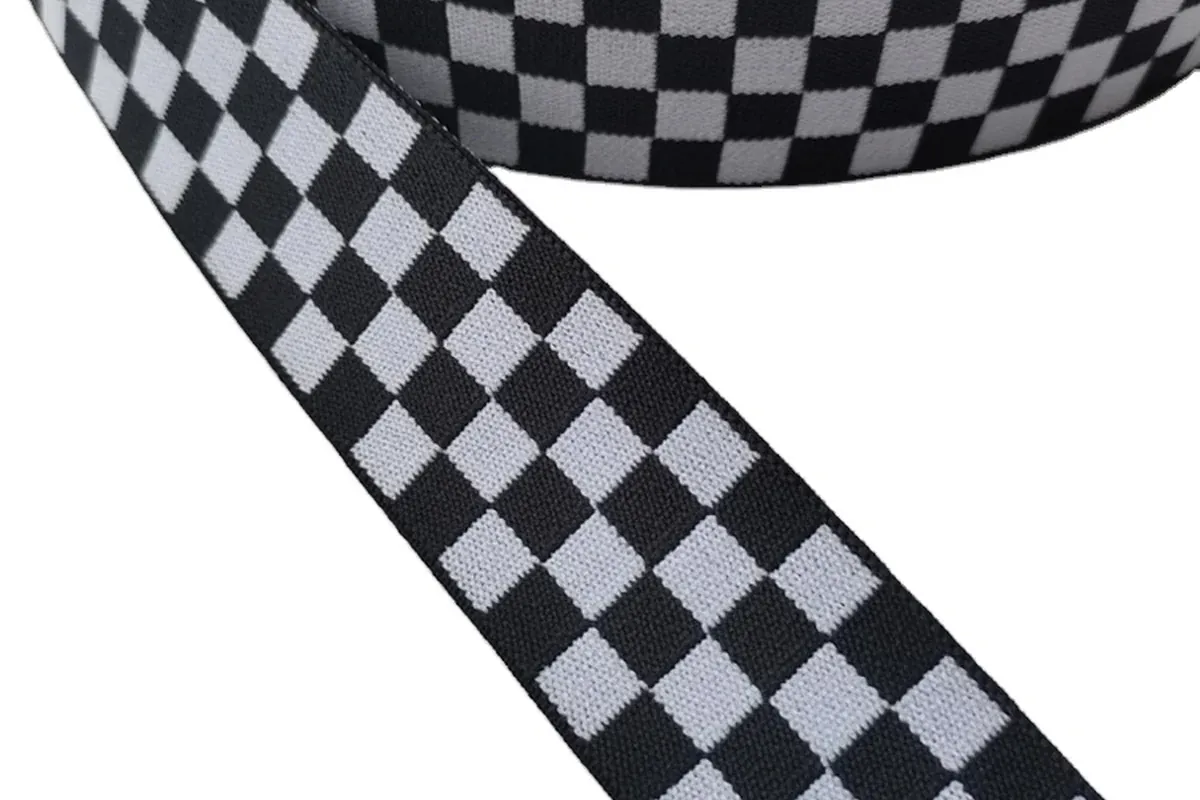
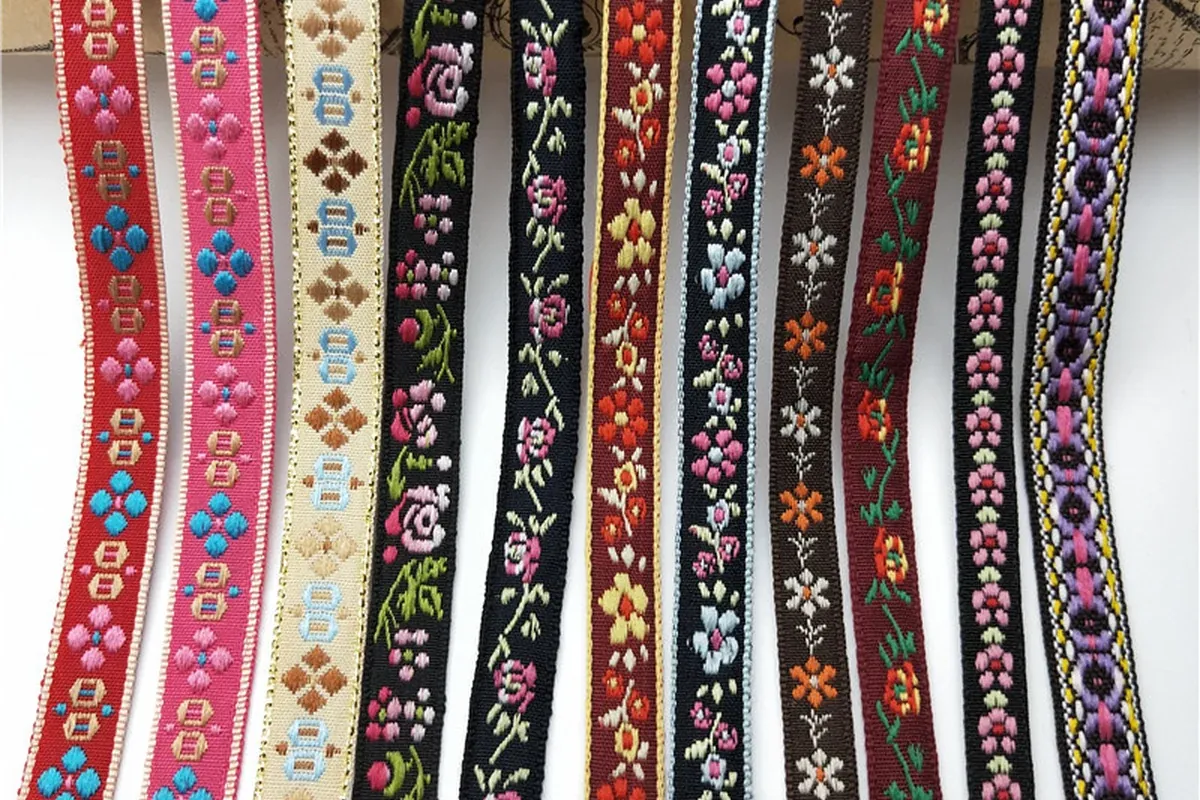
Yarn color in the pattern
The weave places each yarn color in the pattern or its background.
-
Contrasting letters
Light and dark yarns help lettering stand out from the background. -
Tonal motifs
Close shades make the pattern more subtle. -
Color bands
Stripes can frame a logo or divide repeated motifs. -
Reverse face
Yarns may show a different color pattern on the back.
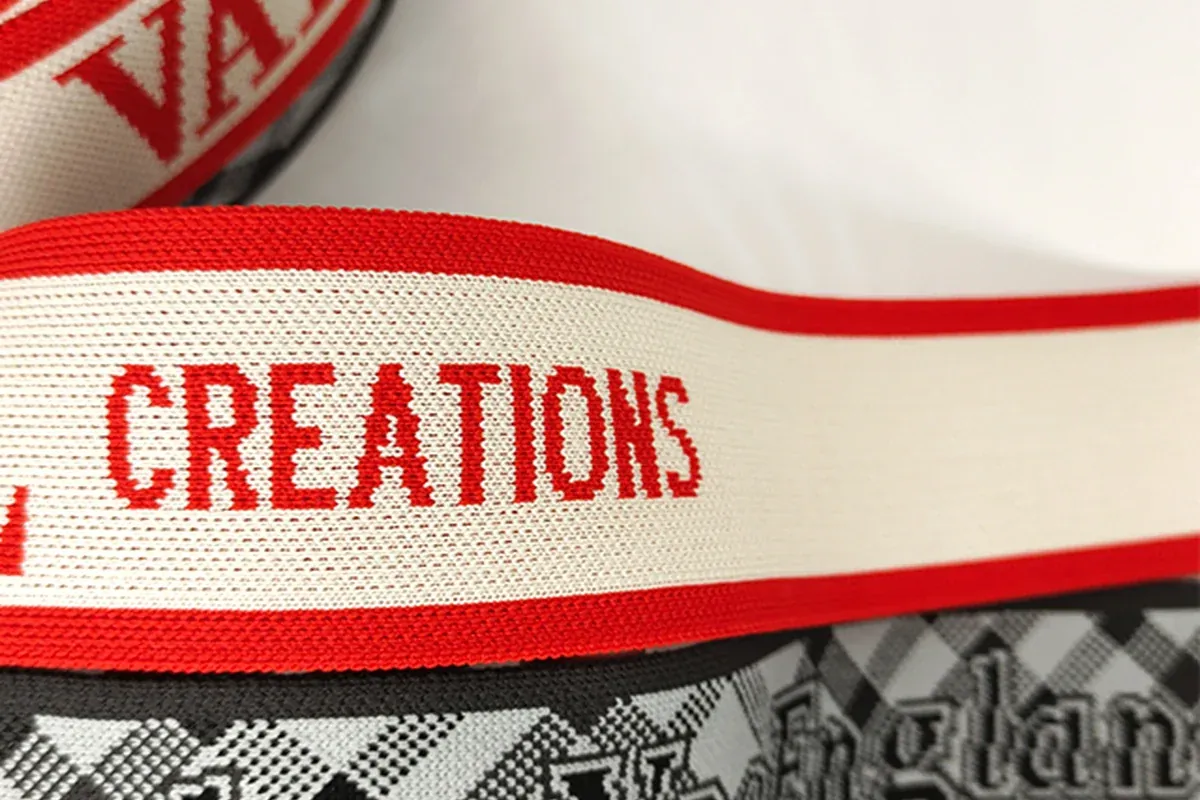
Ways to arrange a woven mark
A woven logo can stand alone, pair with lettering or form part of a continuous patterned edge.
-
Centered logo
One yarn color forms the emblem, another the background. The sides stay plain. -
Name and emblem
A short word can alternate with a small symbol down the band. -
Framed border
Stripes above and below the motif frame the center. -
Seam placement
Moving the motif to one side leaves a plain strip for sewing.
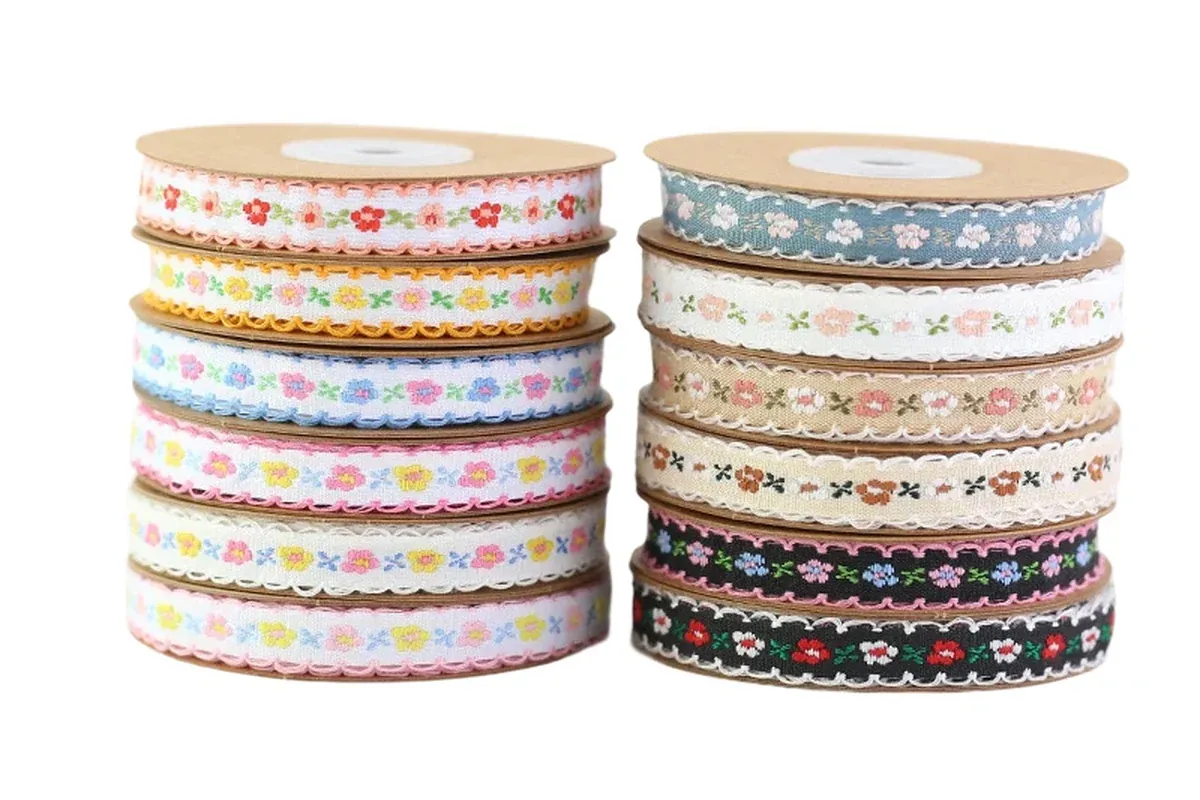
Woven ribbon on the roll
We space the repeats to suit the sewing or packing line.
-
Full repeats
A roll can hold a set number of full, usable repeats. -
Feed direction
Lettering can face the sewing operator as the ribbon feeds into the seam. -
Fixed cuts
A cut length can carry one symbol or several repeats. -
Identification
Yarn color and artwork version can distinguish similar rolls.
Weave and yarn choices
Jacquard can use cotton, polyester or blended yarn. The yarn texture affects the contrast a small logo needs.
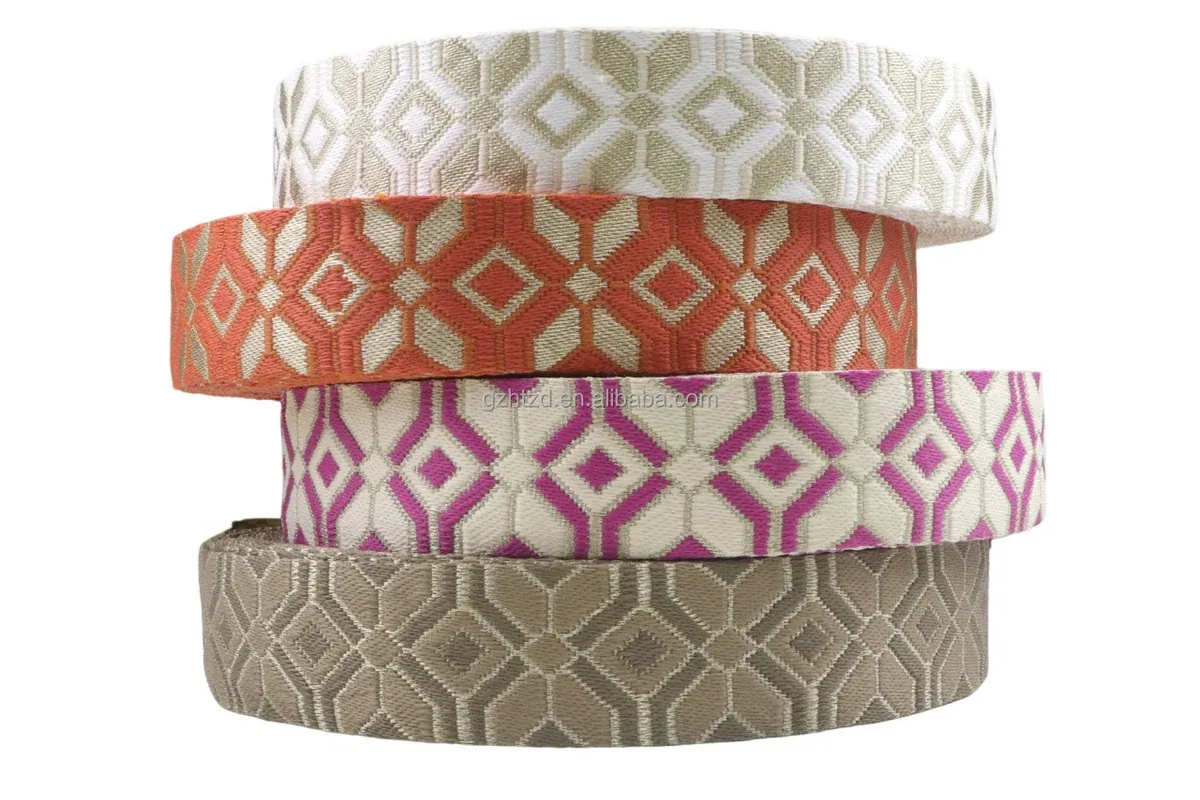
Yarn and fiber options
A plain edge on cotton or polyester jacquard can sit inside the seam, leaving the woven emblem or stripe visible.
Ribbon trim for garment seams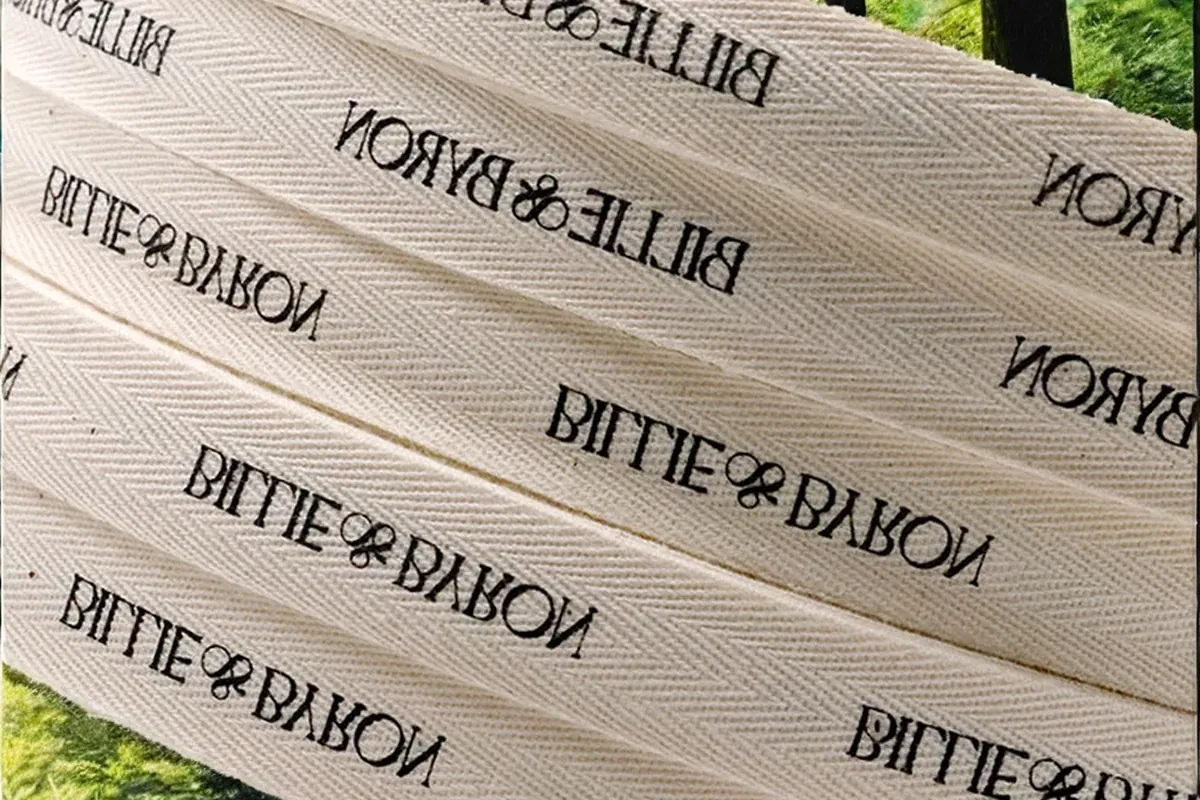
Woven or printed?
Printing adds ink to finished ribbon. In jacquard, the yarn crossings form the letters and give them texture.
Printed logo ribbon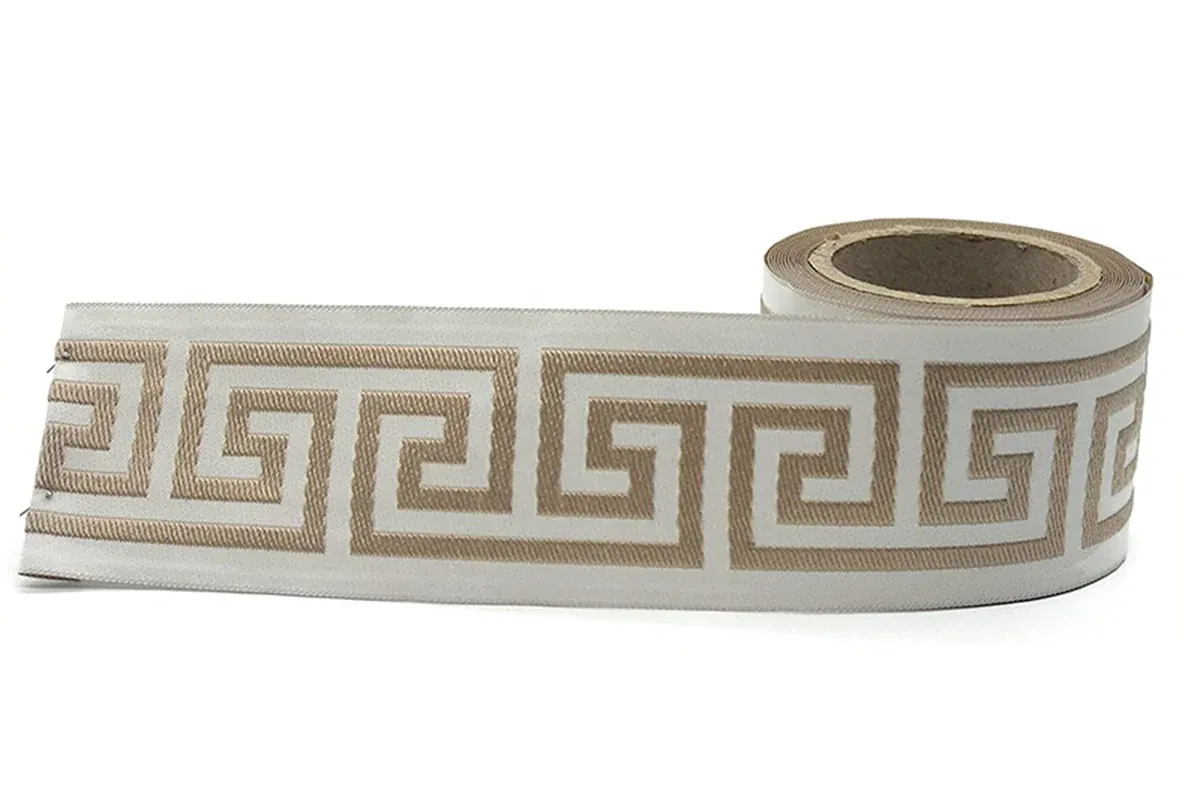
Turning artwork into a woven repeat
Each yarn crossing forms part of the artwork. A broad stroke can span several yarns. A small gap inside a letter uses fewer crossings. One repeat includes the design, seam margin and cut position.
A jacquard brand tab
The logo file shows the wordmark. The sewing edge tells us where it can start and end.
Talk about a woven designWoven design and yarn options
Lettering, repeat spacing and the back of the weave.