
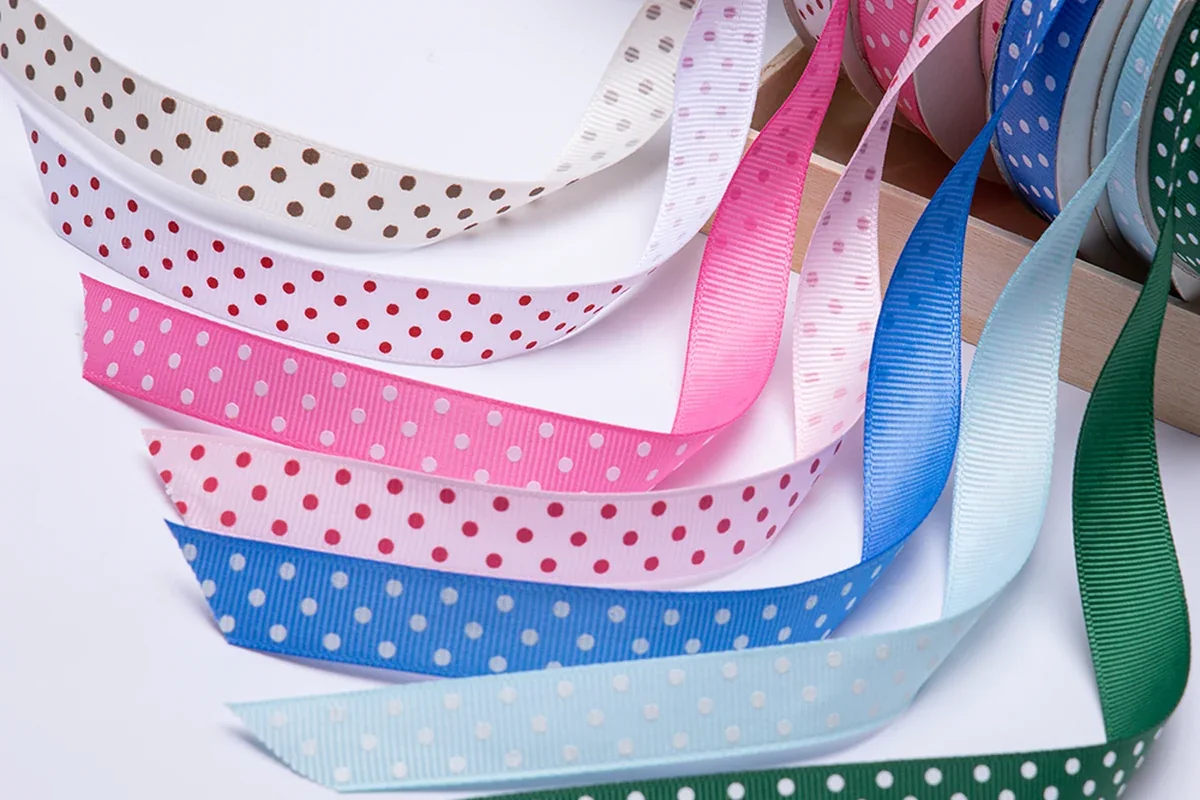
Close-up photographs
A ruler beside the repeat shows logo size and spacing. A back view shows whether the design is visible through the weave.
Production starts with the approved sample and artwork. Weave and color define the base. The motif forms during weaving or goes on later, depending on the design. After inspection, we cut or wind the ribbon for packing.
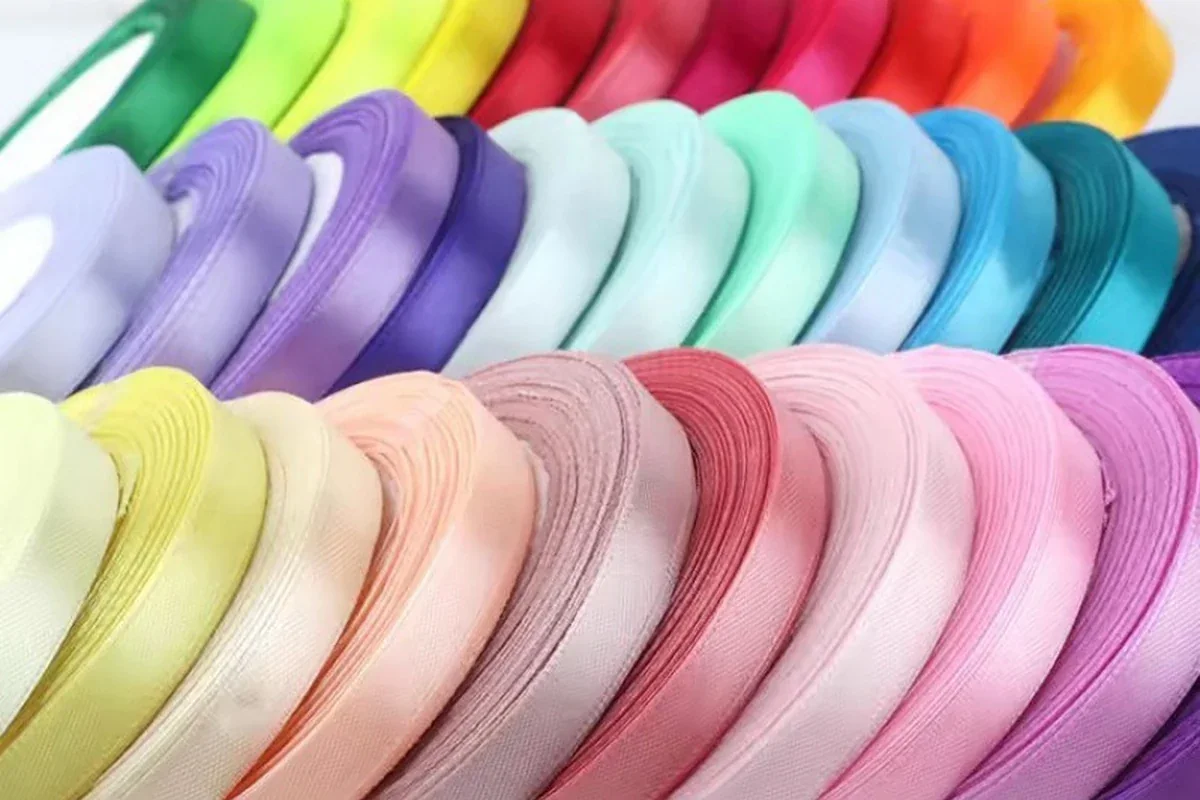
Production starts with an approved sample. To compare finishes or test a logo, see ribbon sample development.

The sample and final artwork identify the production version.

Construction and finish determine how we weave, color and decorate the ribbon.

We check finished ribbon against the order and pack it in the agreed units.

We match packed quantities, carton marks and destination to the shipping arrangements.
A jacquard logo forms on the loom. A printed logo goes onto the finished band.
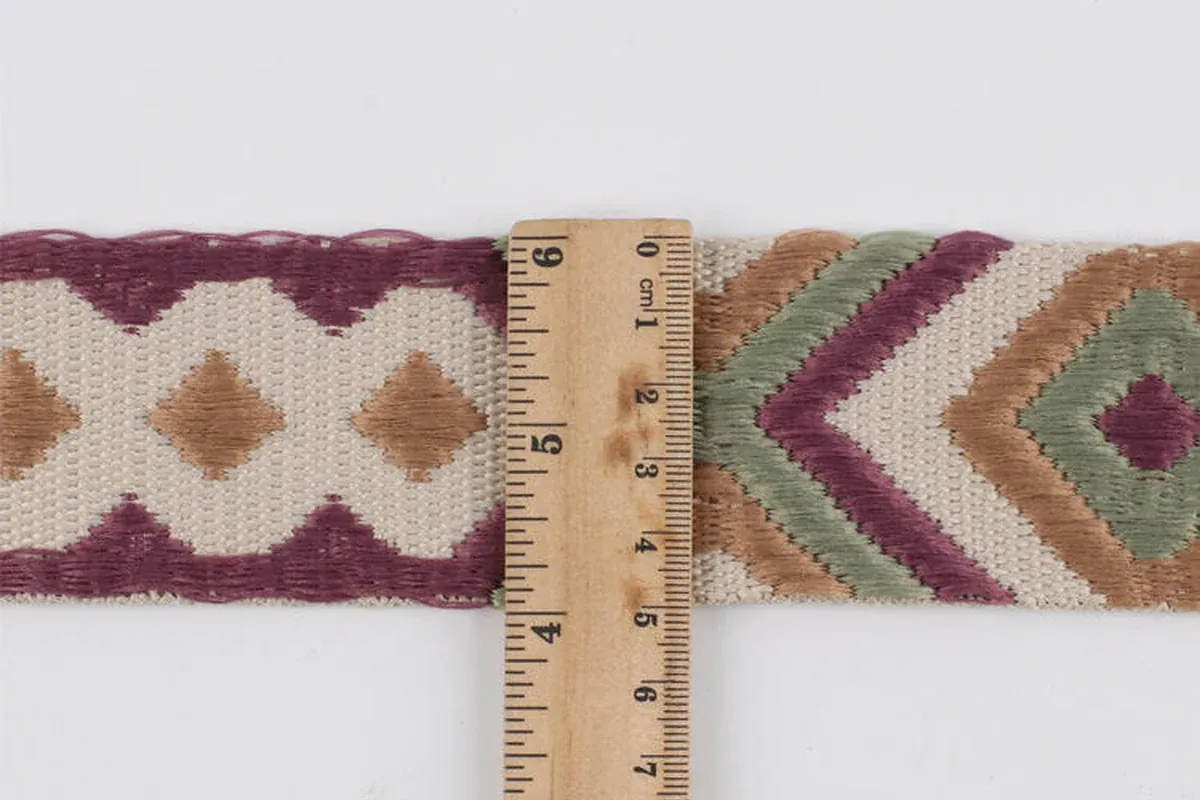
The sample and approved artwork define the production version. A width change can affect logo size or margins.
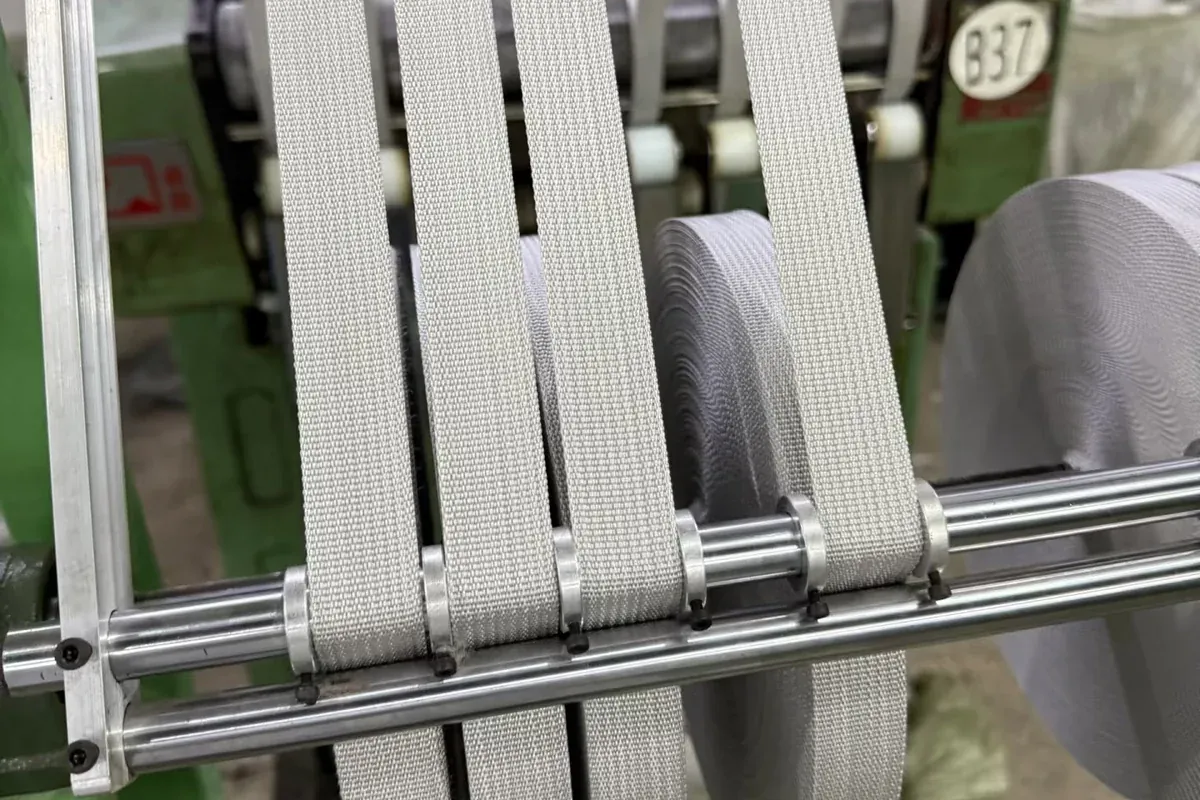
Fiber, width, weave and edges define the base. We can develop a ground shade for the printed, woven or stitched design.
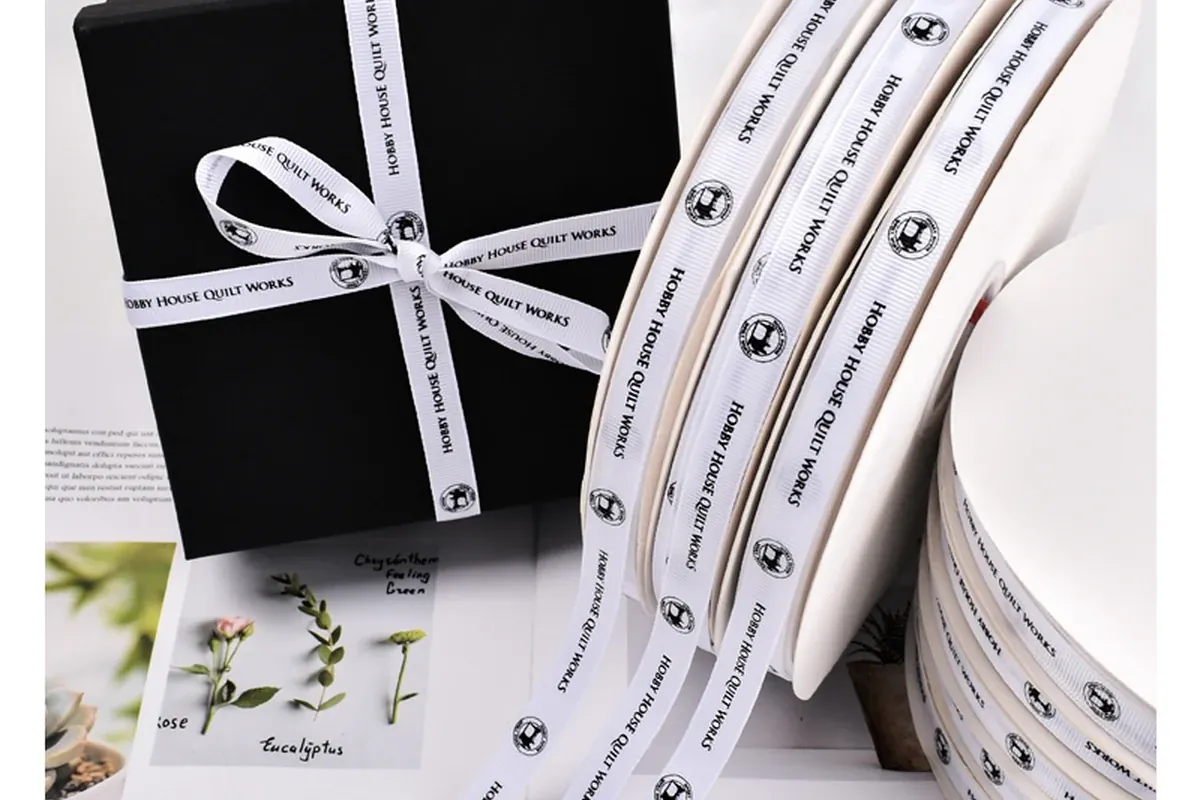
For jacquard ribbon, the motif forms during weaving. For printed ribbon, the repeat is applied to the ribbon face. Embroidery raises parts of the design with thread.
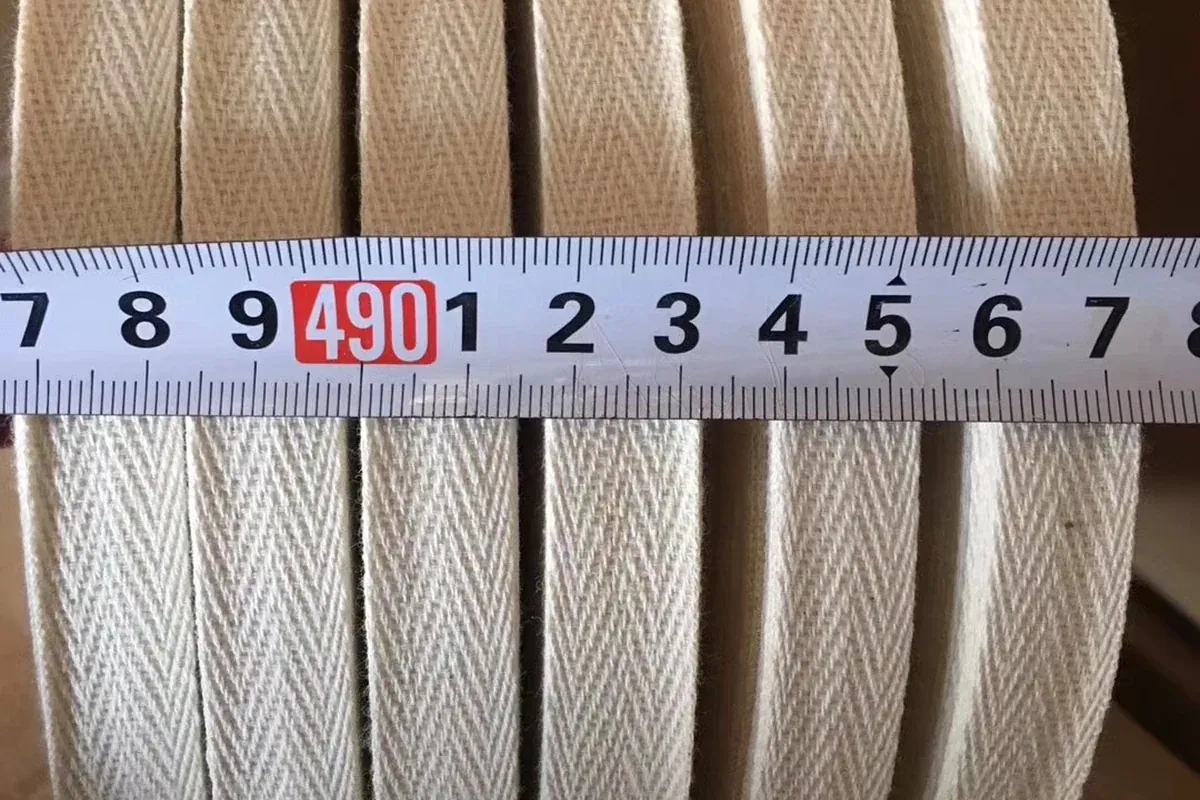
We check against the sample, assessing small lettering at actual size and measuring fringe from the woven center. See the ribbon inspection criteria.
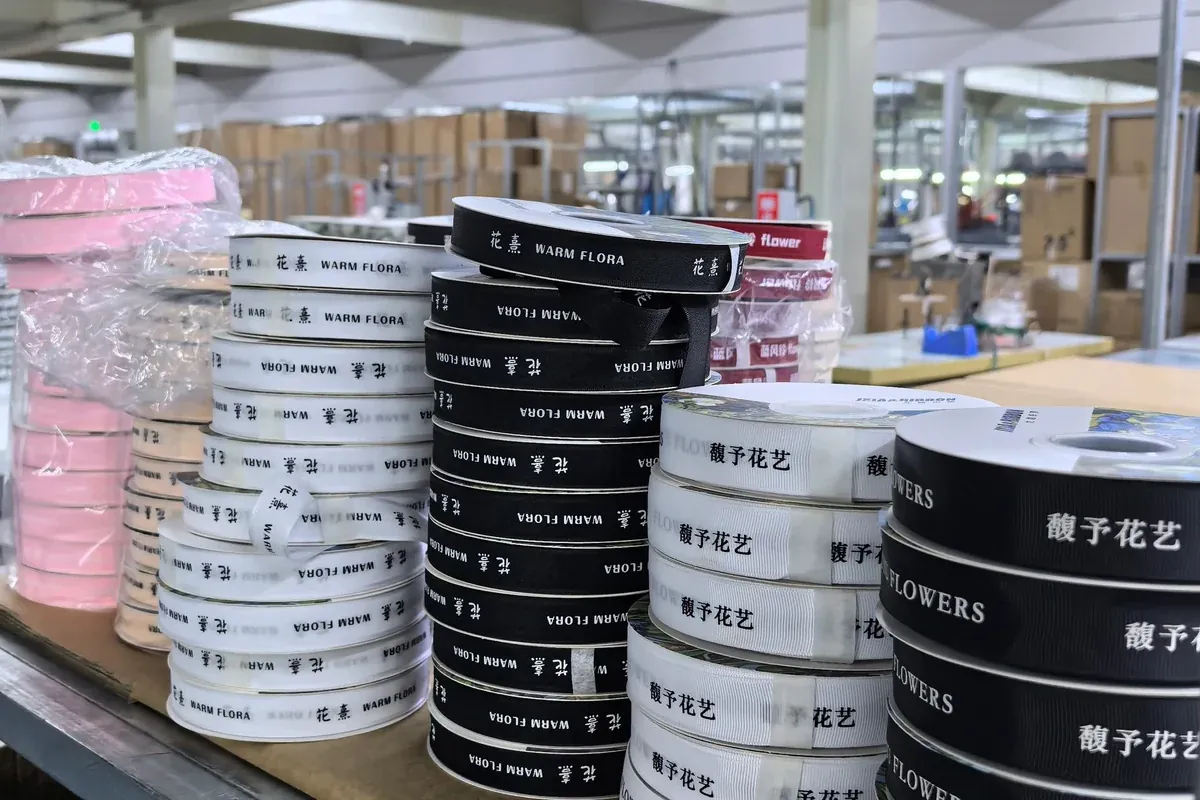
We rewind rolls in the specified direction. For precut ties, cut length and bundle count define each pack.
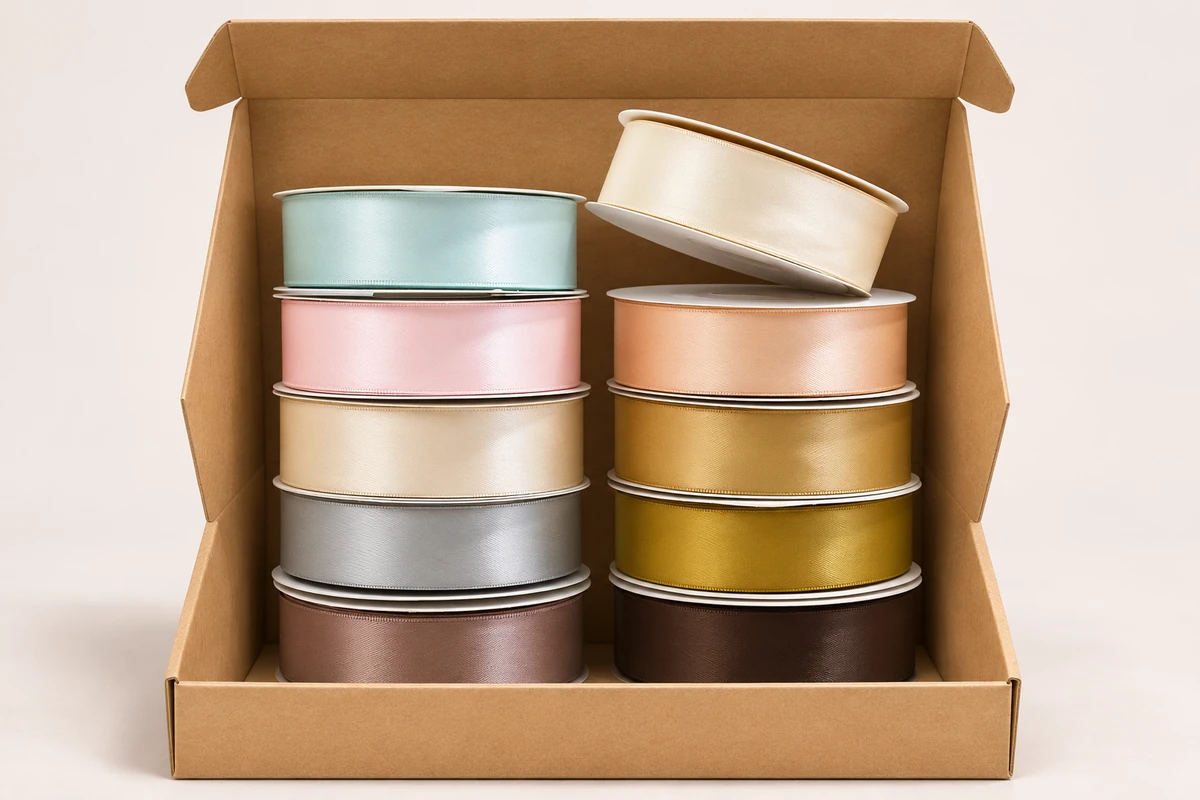
Packing example.
Packed weight, volume and destination guide freight planning. Production completion and delivery are separate dates.
Photos show print registration and edge finish. Video shows how a roll unwinds or a long ribbon drapes.
A ruler beside the repeat shows logo size and spacing. A back view shows whether the design is visible through the weave.
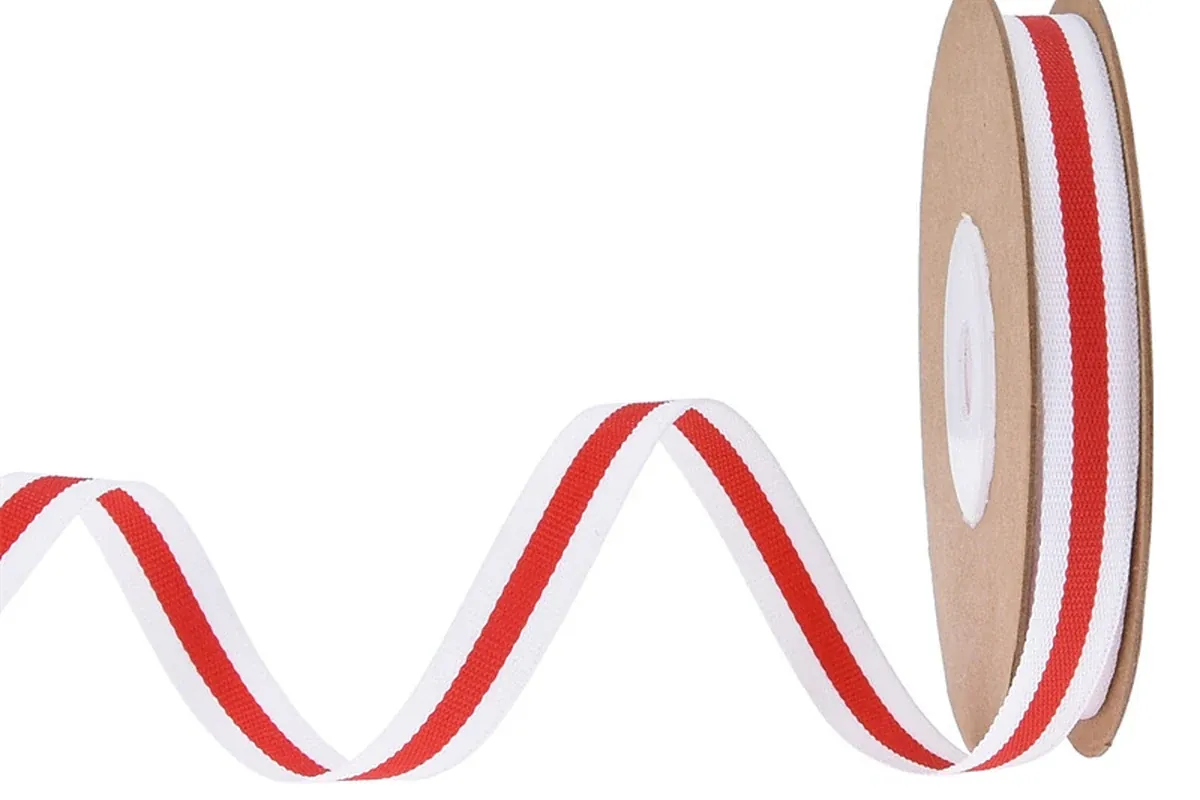
Video shows unwind direction or how a soft ribbon falls when lifted and released.
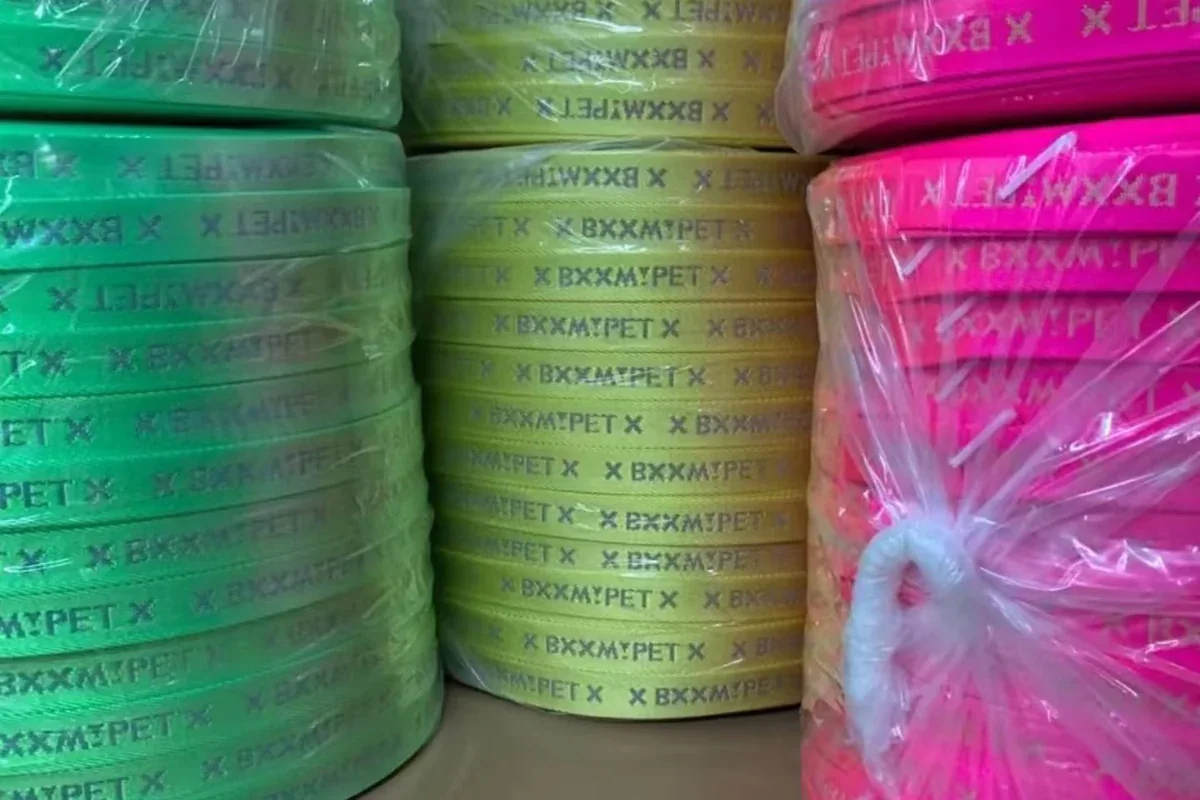
Ribbon rolls in protective wrapping.
Roll labels, bundle counts and carton marks help receiving teams identify similar colors and versions.
The schedule covers making, decorating, finishing, inspecting and packing the ribbon. Construction, decoration and run size affect timing. Transit starts at dispatch.
Discuss a production runFrom sample approval to shipment.