
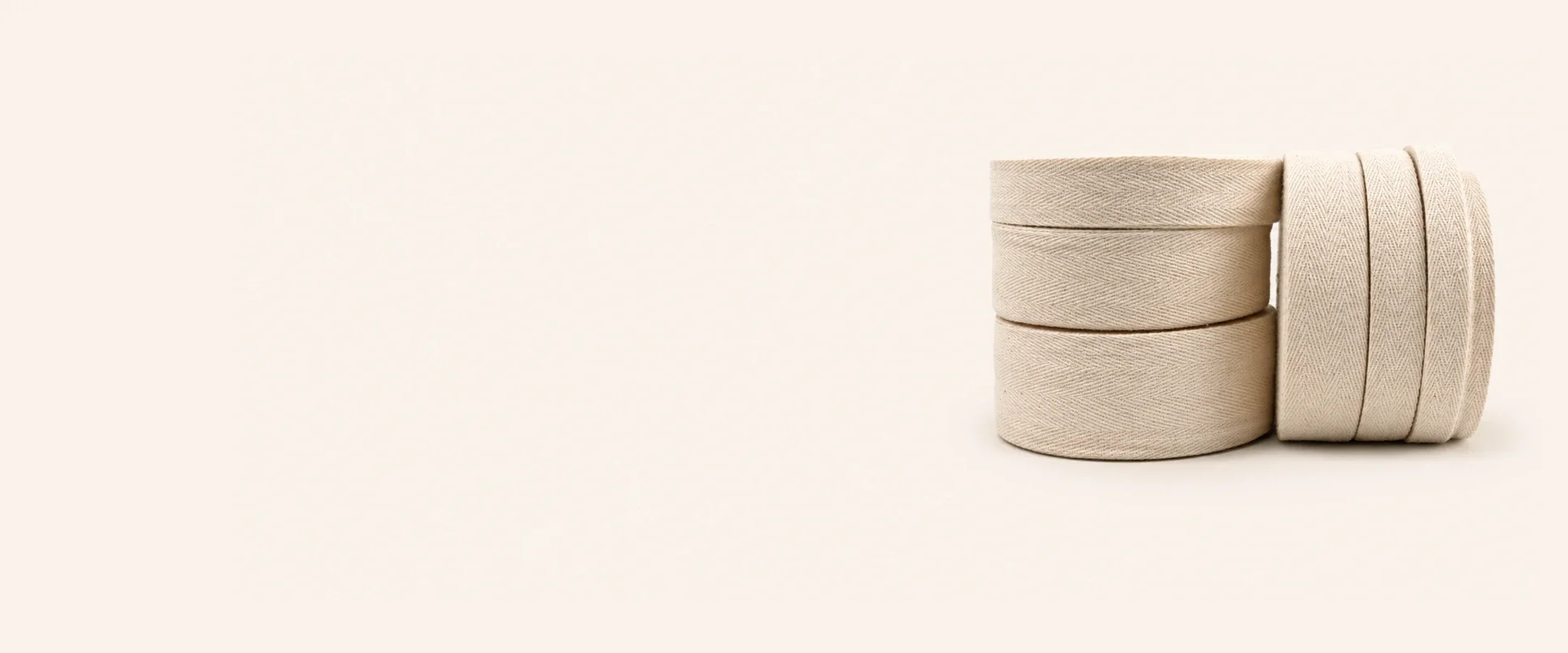
Custom Apparel Ribbon
We make cotton twill binding, jacquard stripes for seam inserts, soft neckline tape and waistband ribbon. We can leave a plain sewing margin beside the motif.
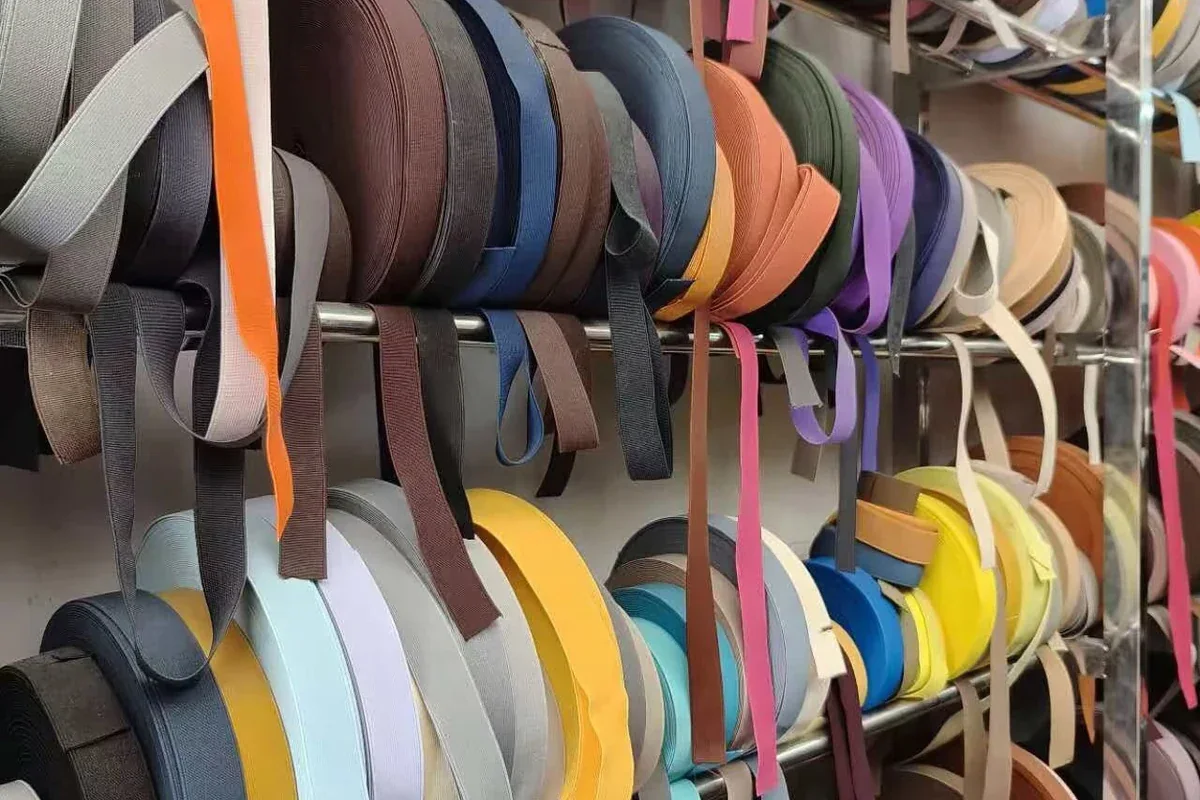
Trim for each garment detail
- A plain edge binding can wrap a seam or neckline.
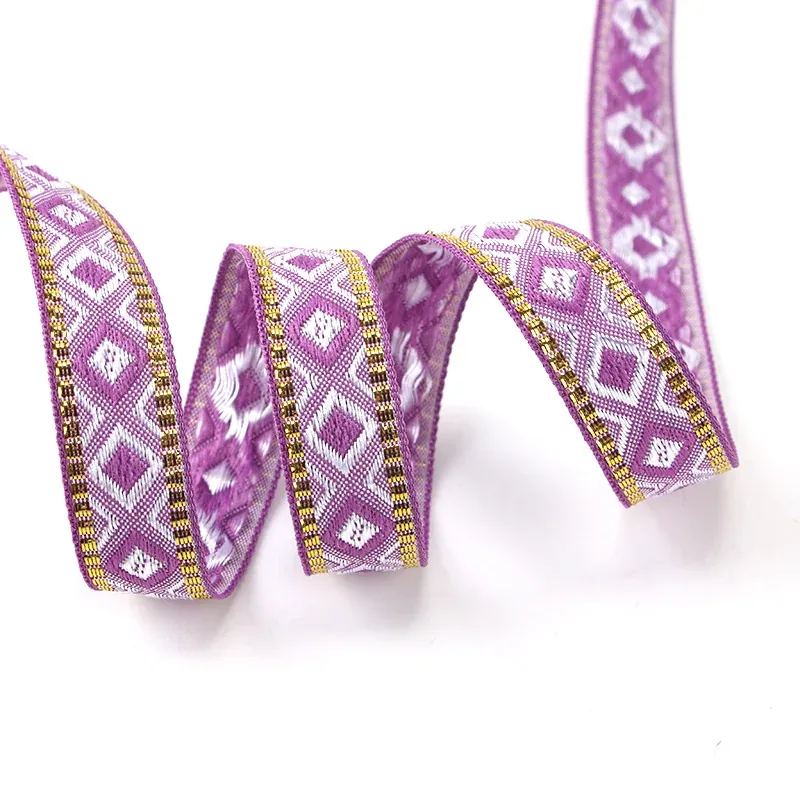
- A jacquard band can carry a visible repeat along a garment edge.
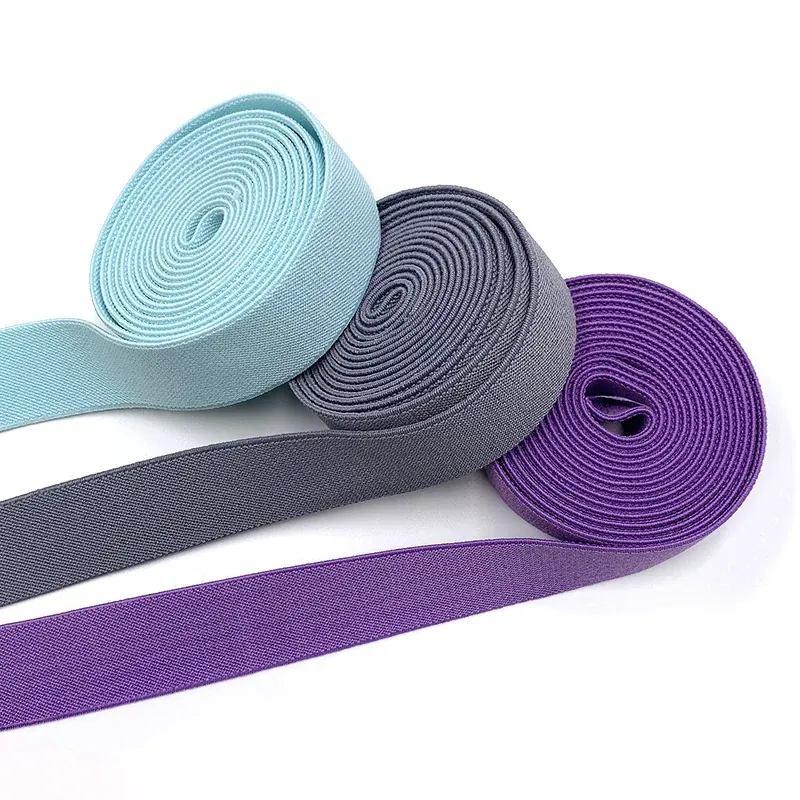
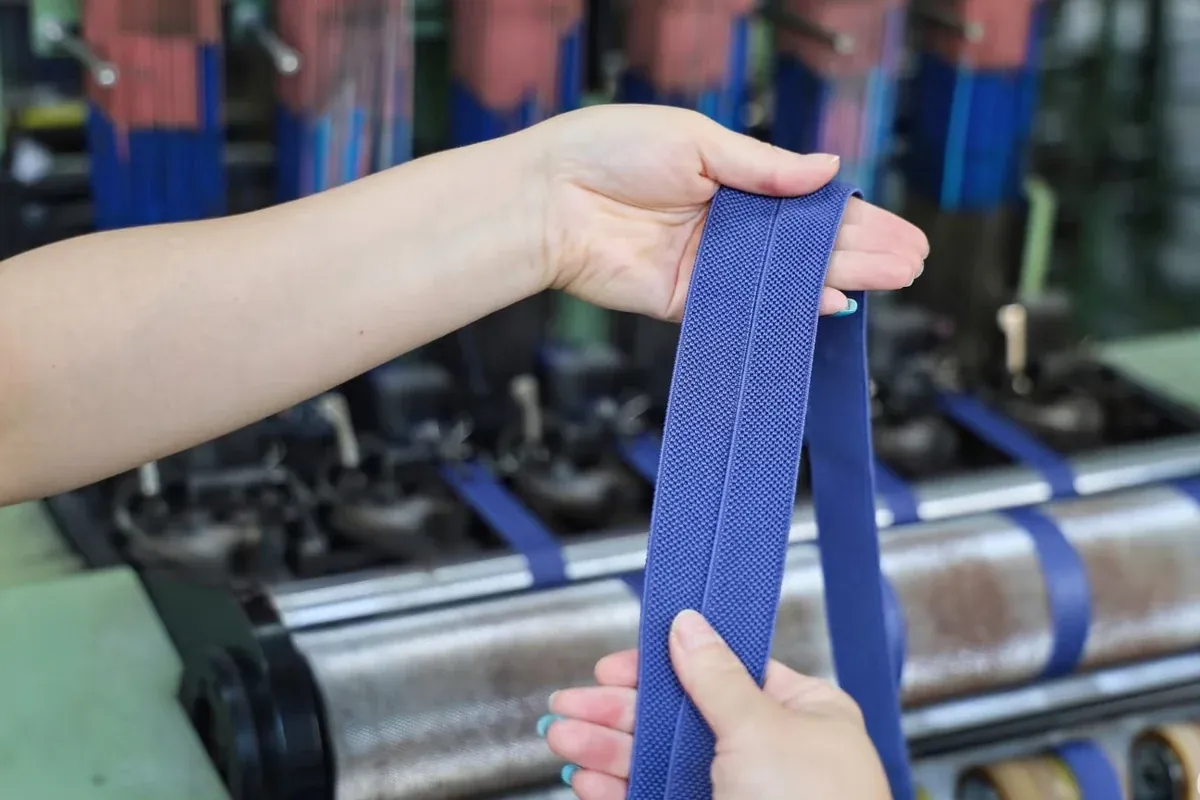
- Waistbands can use woven strips or, where stretch matters, elastic bands.
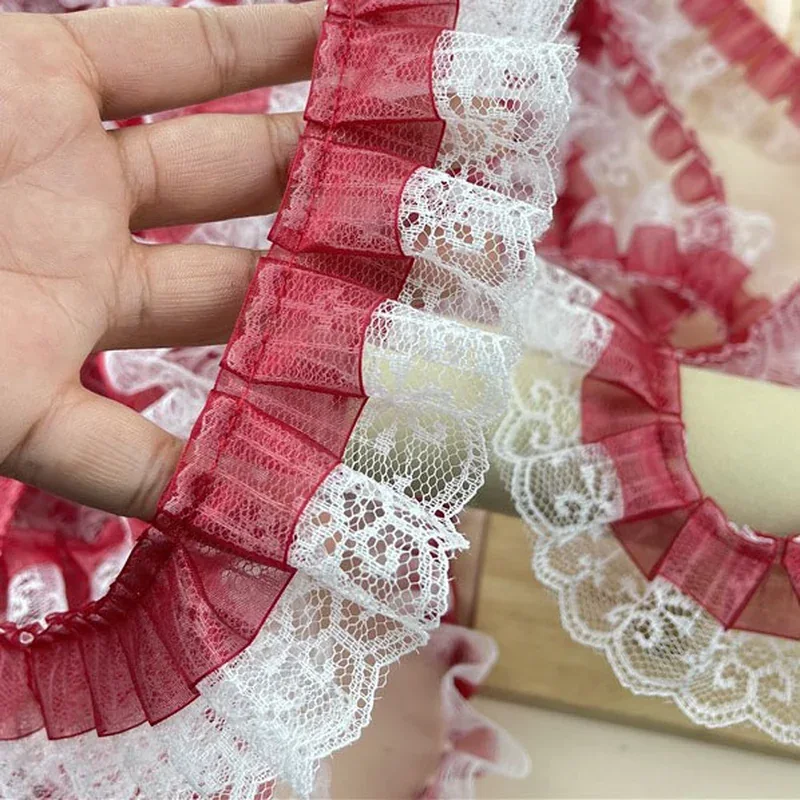
- Satin or lace can add a small decorative detail to sleepwear or lingerie.
- Ribbon orders start at 50 meters.
Where the trim sits on the garment
The same brand stripe can form a broad band or a narrow line between two garment pieces. We can shift the motif, vary the exposed width or leave a plain sewing margin.

Neckline edging
Soft satin or cotton tape can form a narrow neckline edge.

Waist trim
Wider woven or elastic bands provide a visible waistband or decorative stripe.

Twill binding
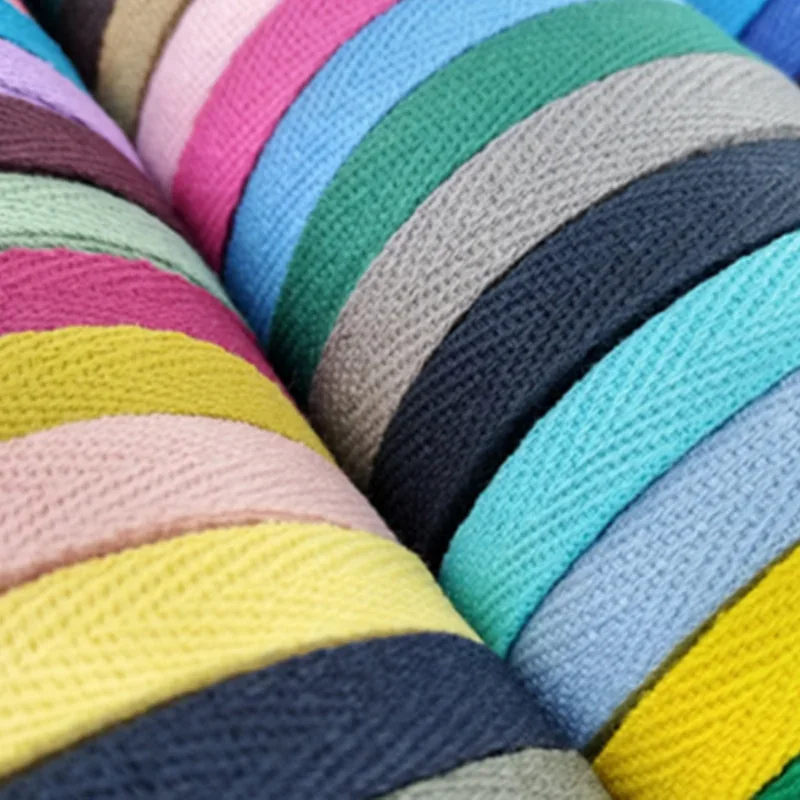
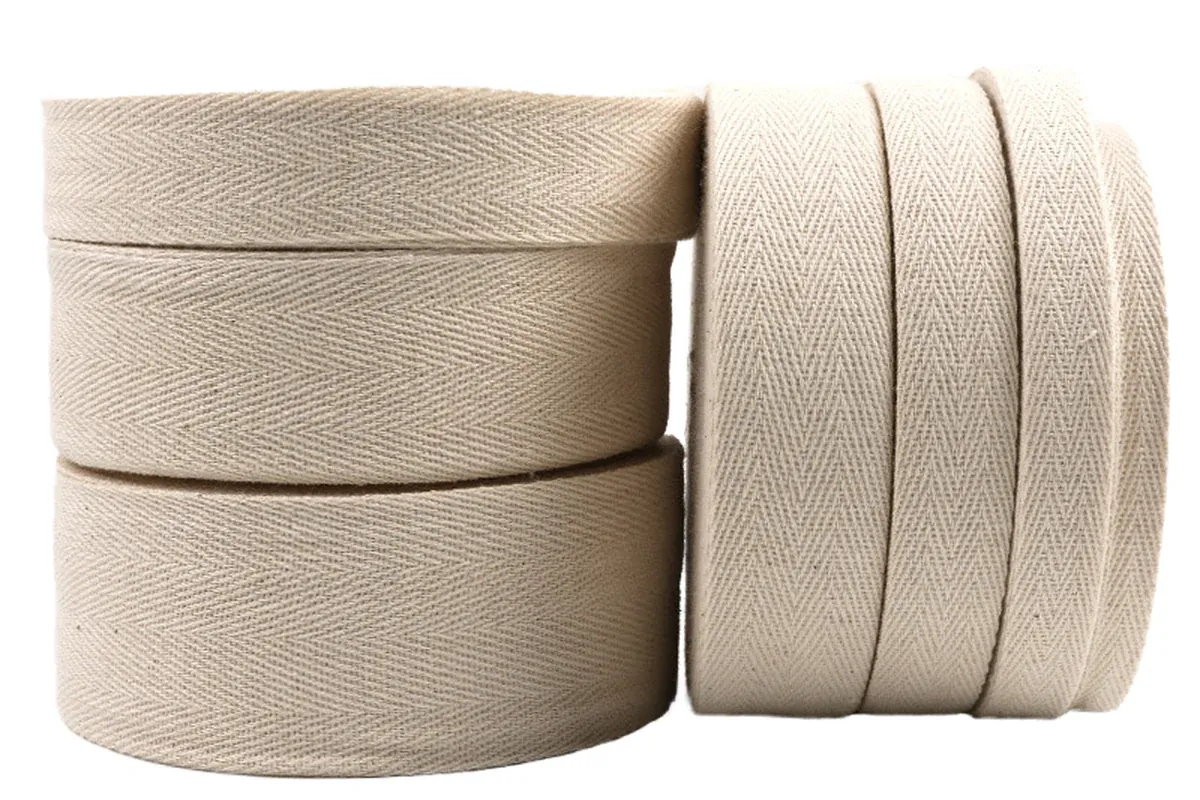
Cotton twill gives the edge a matte surface with a diagonal grain.

Woven branding
In jacquard trim, the yarns form the wordmark or motif.

Bow accents
Garment bows can be made separately in satin, grosgrain or velvet.

Soft styling
Narrow satin, elastic or lace trim can finish sleepwear and lingerie details.
Neckline, waistband and seam options
Trim can form a visible border, bind an edge or carry a woven design.
Garment trim by position
Both placement and construction matter. A waistband and neckline can share a color while needing different widths and flexibility.
-
Neckline Ribbon
A narrow facing or decorative band can follow the neckline curve. -
Waistband Ribbon
Waist trim can be exposed or partly concealed inside the garment. -
Jacquard Ribbon
A jacquard band forms a visible woven pattern along the seam. -
Cotton Twill Tape
Cotton twill tape finishes an edge with a matte diagonal texture.
How much trim remains exposed?
Part of the roll width may disappear after sewing. Binding folds around an edge. A seam insert leaves its margin between the fabric layers.
-
Folded binding
Cotton twill tape can fold around a garment's cut edge. -
Seam insert
A narrow stripe shows between the two pieces of fabric after sewing. -
Waistband
The garment can use a folded facing or an exposed decorative strip. -
Curved neckline
A narrow band follows the stitch line and leaves more fabric showing than a wider trim.
Colorways for clothing
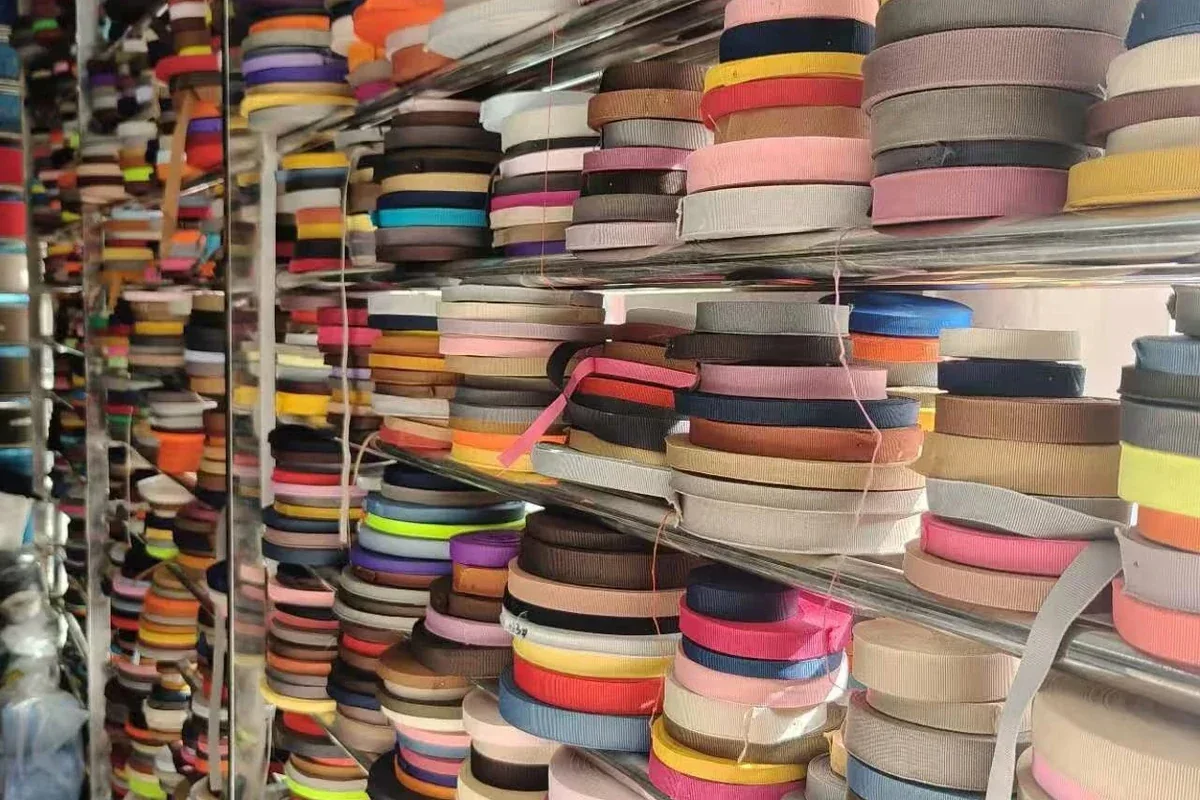
A trim can blend into the garment or become its contrasting edge.
-
Matching trim
A close color match makes cotton binding blend into the garment. -
Contrast stripe
A brighter band defines a seam or waistband. -
Woven colors
Several yarn shades can form a jacquard border or logo. -
Visible reverse
Both faces may show on a tie, cuff or turned collar.
Brand details along a seam
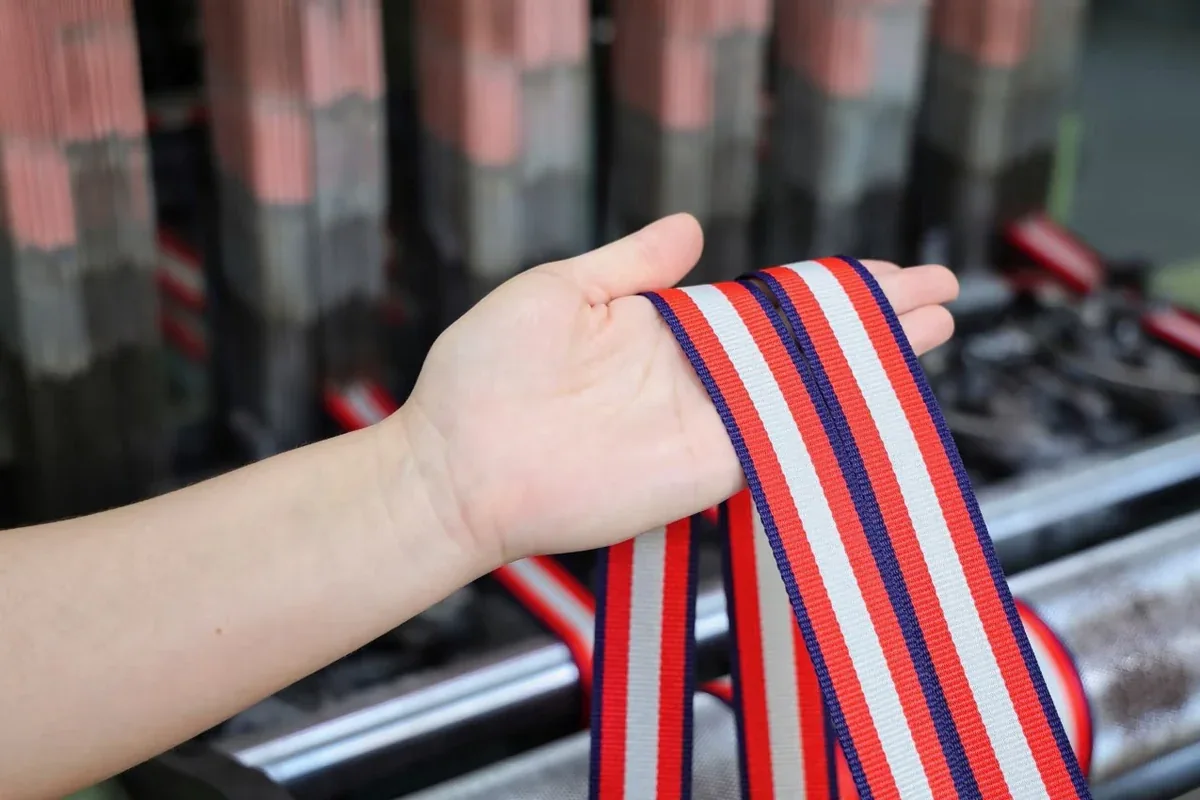
A word or geometric stripe can sit beside a plain sewing margin. At the join, the cut position determines whether the pattern continues across both pieces.
-
Continuous side stripe
A repeat runs down the length of a garment seam. -
Branded waistband
A wordmark can sit in the exposed part of the band. -
Small bow detail
A separate satin, grosgrain or velvet bow can decorate a neckline or waist. -
Seam join
Matching the cuts at the same point in the repeat can keep each letter whole at the join.
Formats for garment assembly
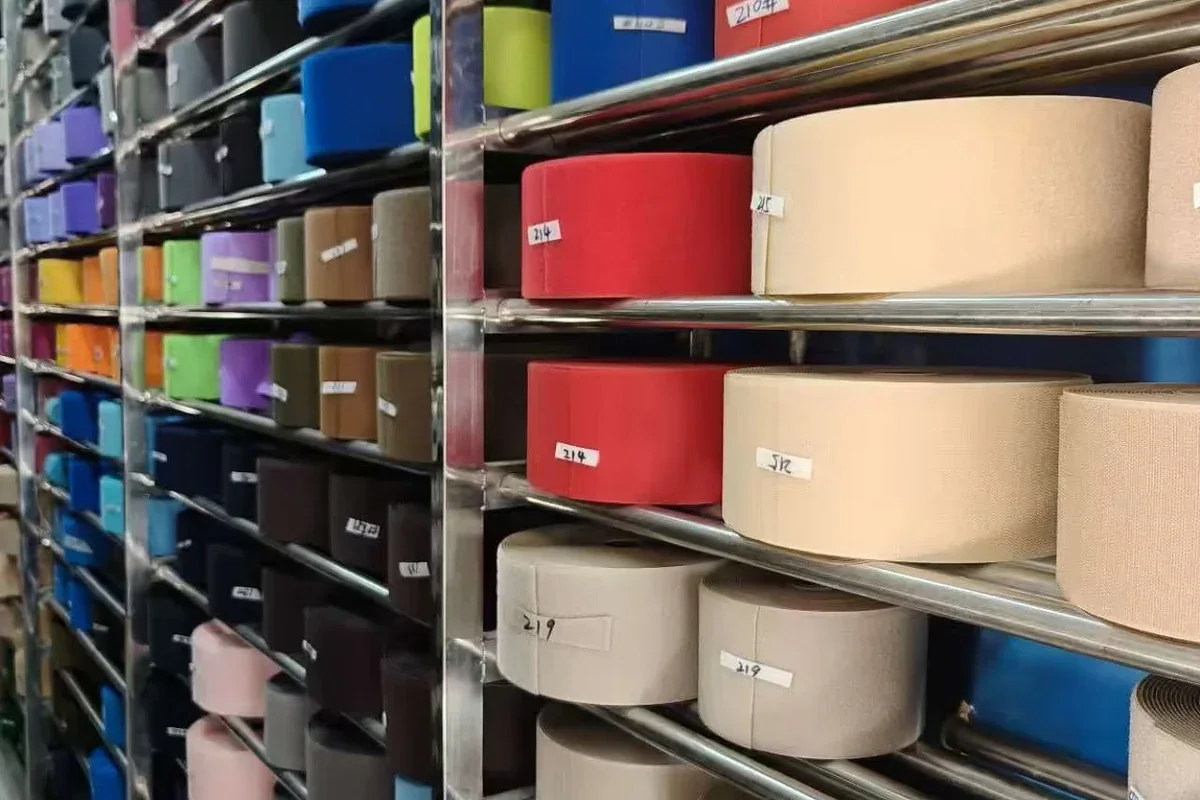
We can supply the same trim on continuous rolls or in pieces grouped for sewing.
-
Garment rolls
A cutter can take several lengths from one roll. -
Fixed lengths
Matching pieces can be cut for a single garment size. -
Colorway label
Roll labels can identify the garment color or style. -
Feed orientation
We can orient a stripe or wordmark to feed the right way during sewing.
Choosing materials for garment trim
Bindings, seam inserts and decorative waistbands show different amounts of the ribbon.
Bases for garment trim
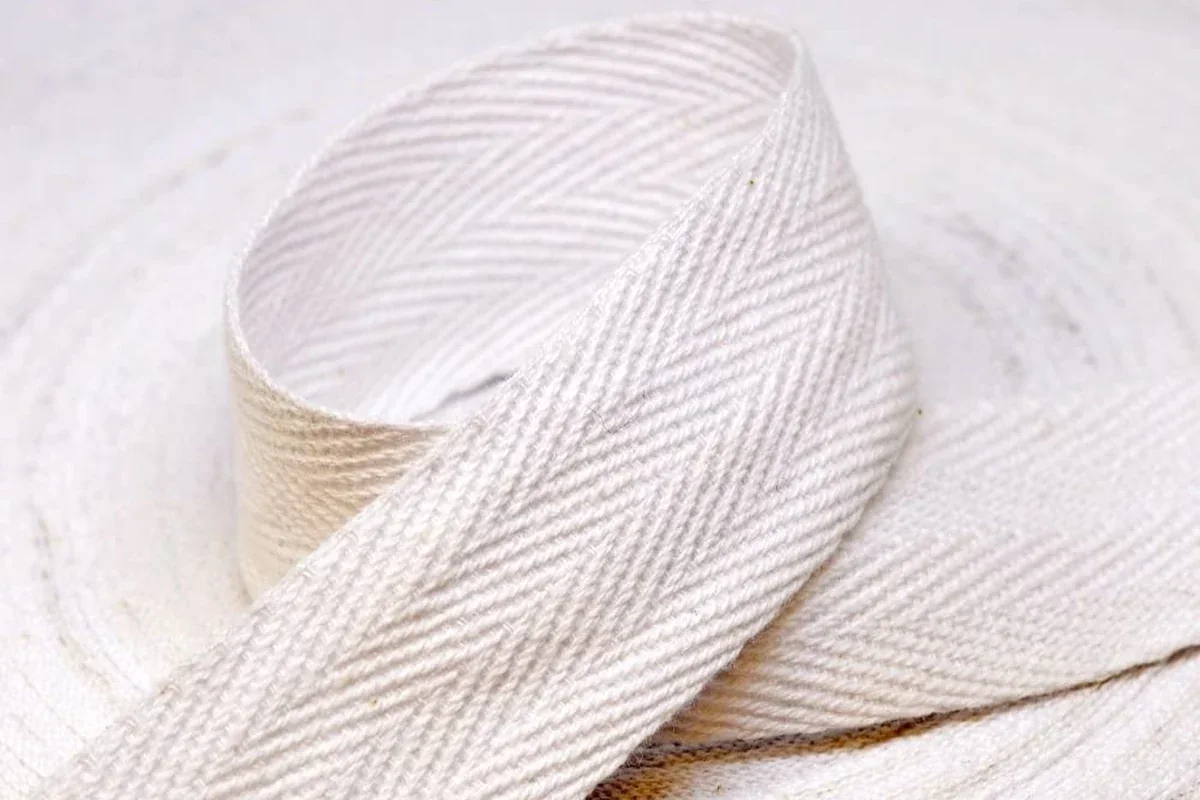
Cotton twill gives a binding or seam a matte diagonal grain. Folding it under can leave a narrow line visible.
Cotton twill ribbon for binding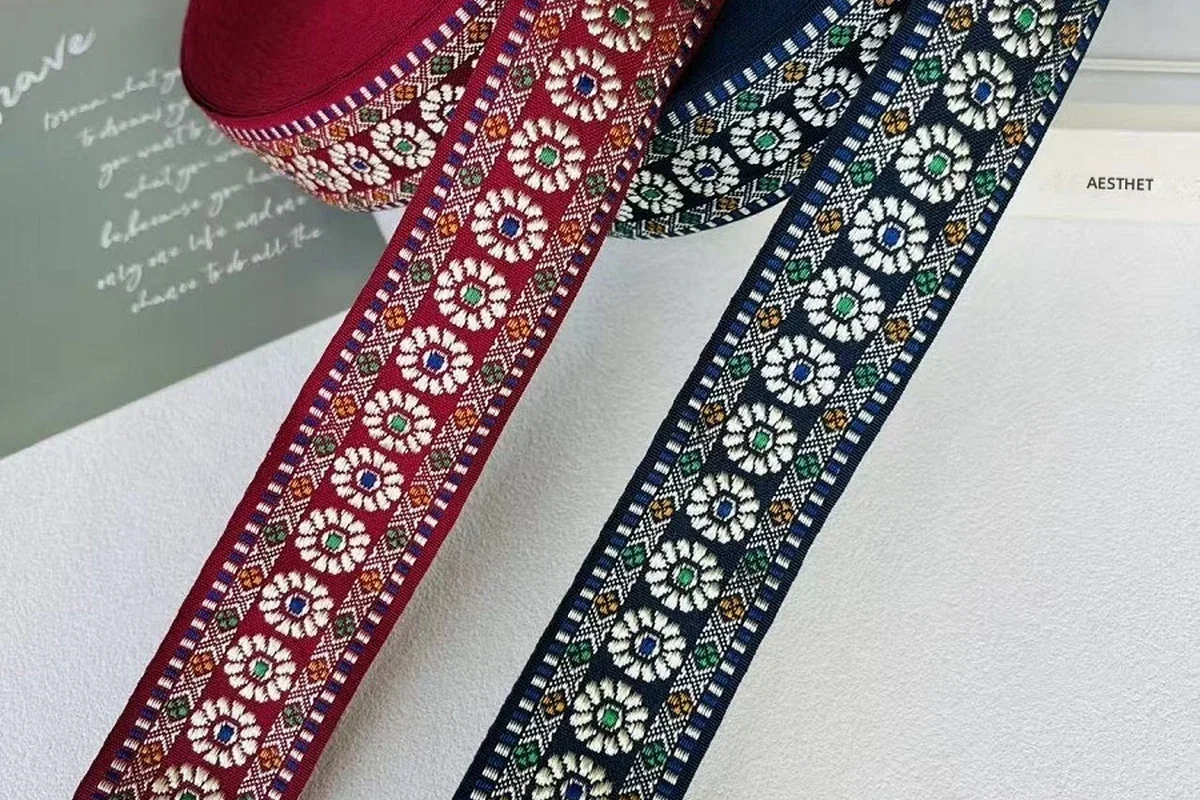
Plain binding or woven pattern?
In jacquard trim, the yarns form the pattern. A plain sewing margin keeps the motif clear of the stitching.
Jacquard ribbon for patterned trim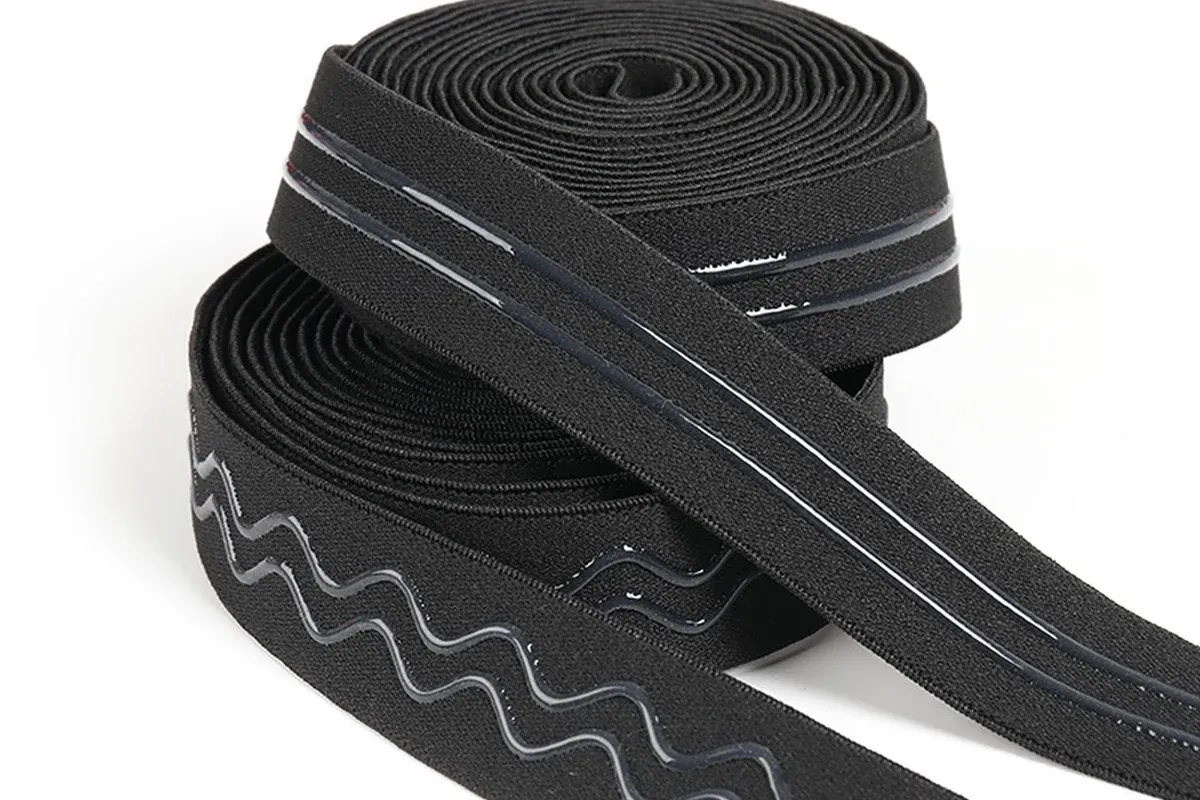
A fitted waistband
Elastic lets a waistband stretch and recover. Nonstretch woven tape can form a fixed waistband or a decorative stripe. A smooth, ribbed or plush face can suit different garments.
Elastic ribbon for fitted bands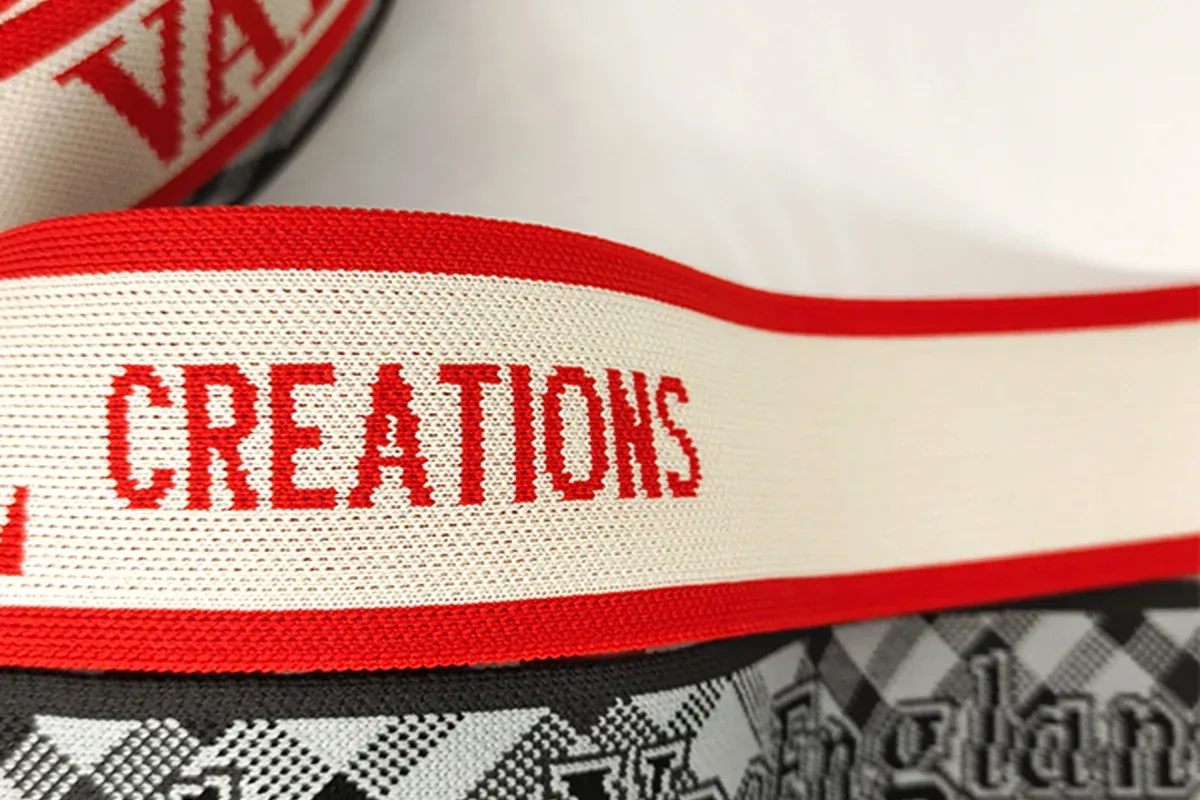
Where the motif goes after stitching
We can keep the motif clear of the stitching and match the repeat where two ends meet. A strip sewn flat shows more ribbon than a seam insert.
A trim that works at the seam
A sketch or sewn detail shows which part of the design stays visible at the seam and which part folds inside.
Discuss garment trimGarment bindings and trims
Woven branding, bindings, sewn edges and trim for a garment range.