
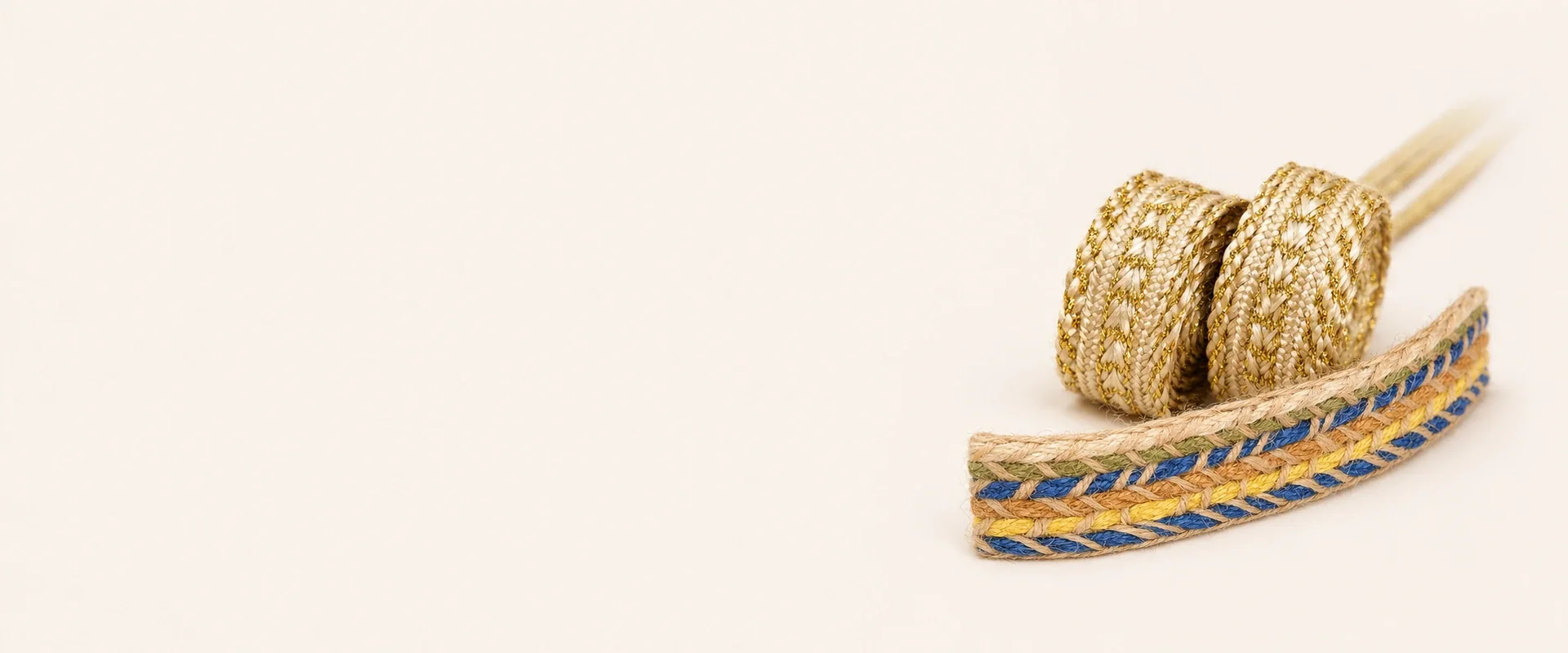
Custom Braided Ribbon
We make flat braid for sewn borders and round braid for ties that pass through loops or fittings. Cotton, polyester or blended strands can form a solid color, a diagonal stripe or a repeating color pattern.
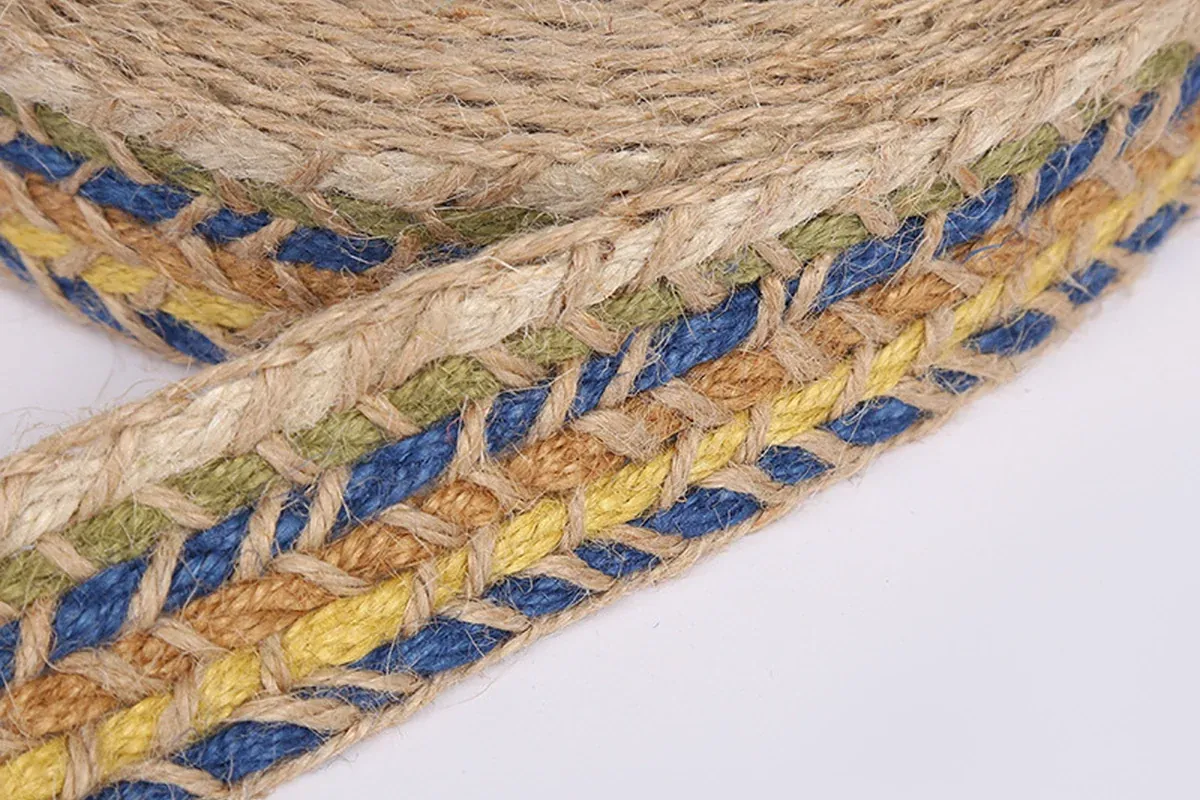
How strands shape the braid
- A flat braid shows more of the pattern along a garment edge.
- A round braid makes a thicker, cord-like tie.
- Strand colors can form diagonals, alternating lines or a subtle tonal pattern.
- Cotton, polyester and blended yarns change the surface and feel.
- Ribbon orders start at 50 meters.
Strand pattern and shape
The top view shows the crossings. The side shows a flat band or round cord. We can start with an existing braid or develop a new shape and color pattern.

Flat profile
A flat band can sit close to a box edge or seam.

Rounded profile
A thicker braid stands out when seen from the side.

Contrasting strands
Alternating colors make the crossings stand out.

Tonal braid
Close shades show texture without a strong diagonal stripe.

Yarn choice
Cotton has a matte surface. Polyester or blended yarns offer different textures.

Cut or continuous
A cut tie can include extra length for a knot or sewn end. Rolls suit long edges.
Braided edges, ties and borders
The examples vary in strand pattern, fiber and color.
Photos show style references; fiber composition is confirmed with your sample.
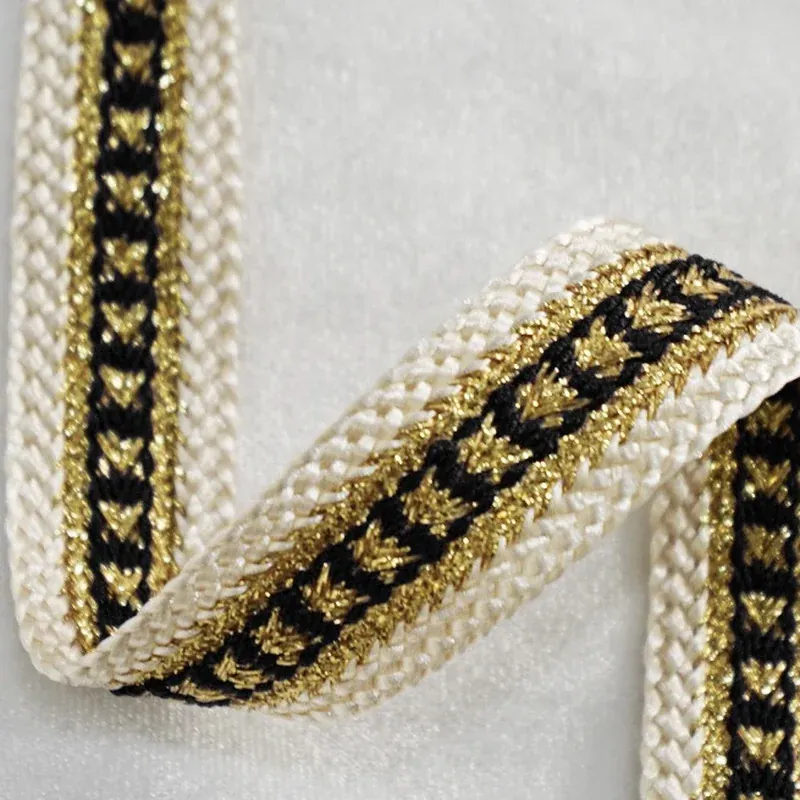
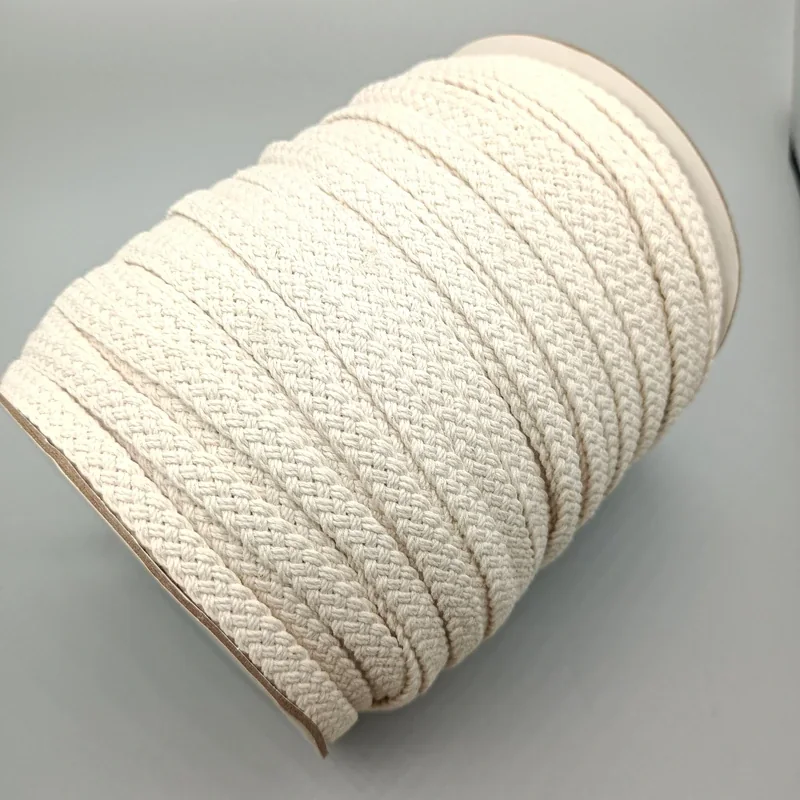
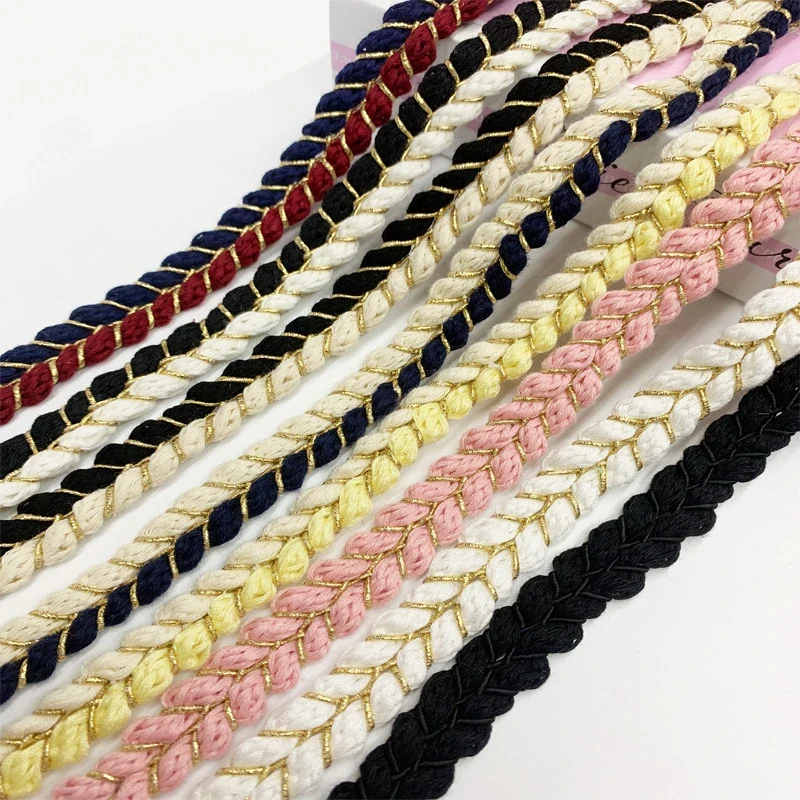
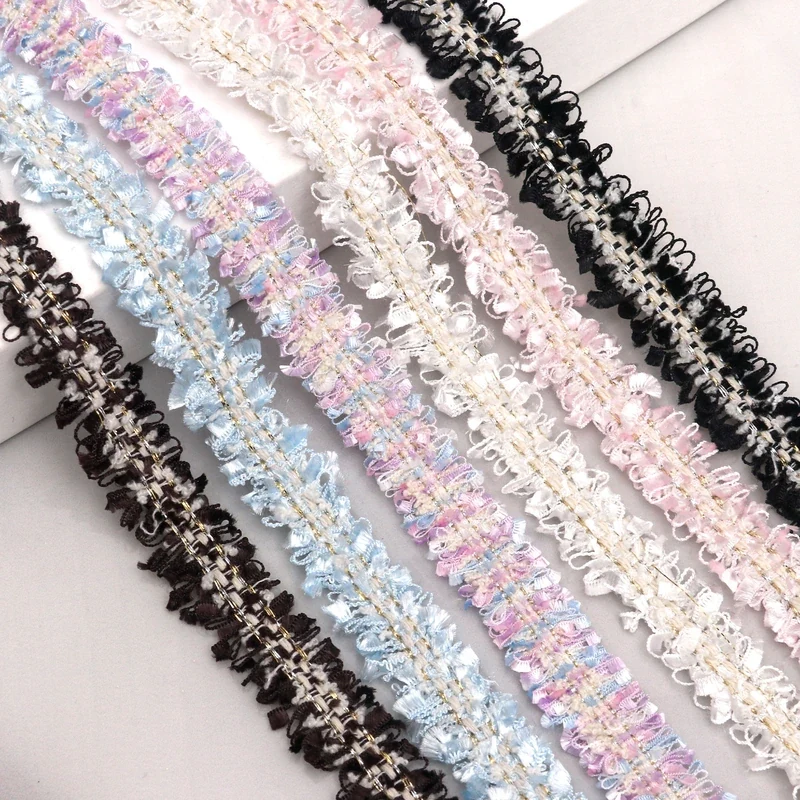
Flat and cord-like braids
A raised cord can frame an edge. A flat band can cover it.
-
Braided Ribbon
Strand crossings form a visible pattern along the edge. -
Cotton Braid
Cotton braid works as a matte trim beside woven fabric. -
Polyester Braid
A contrast polyester strand can run through the braid. -
Blended-Fiber Braid
A blend can combine fiber textures in one band.
Flat braid width and cord diameter
Flat trim needs a width and thickness. A round tie must fit through its eyelet. The two shapes can share yarn colors but fit differently.
-
Flat edge
A thin, flat band lies close to a seam or box panel. -
Raised outline
A thicker braid gives the edge a raised outline. -
Round tie
The widest part of a round braid must fit through the hole or ring. -
Finished length
The cut includes the ends hidden in a seam or knot.
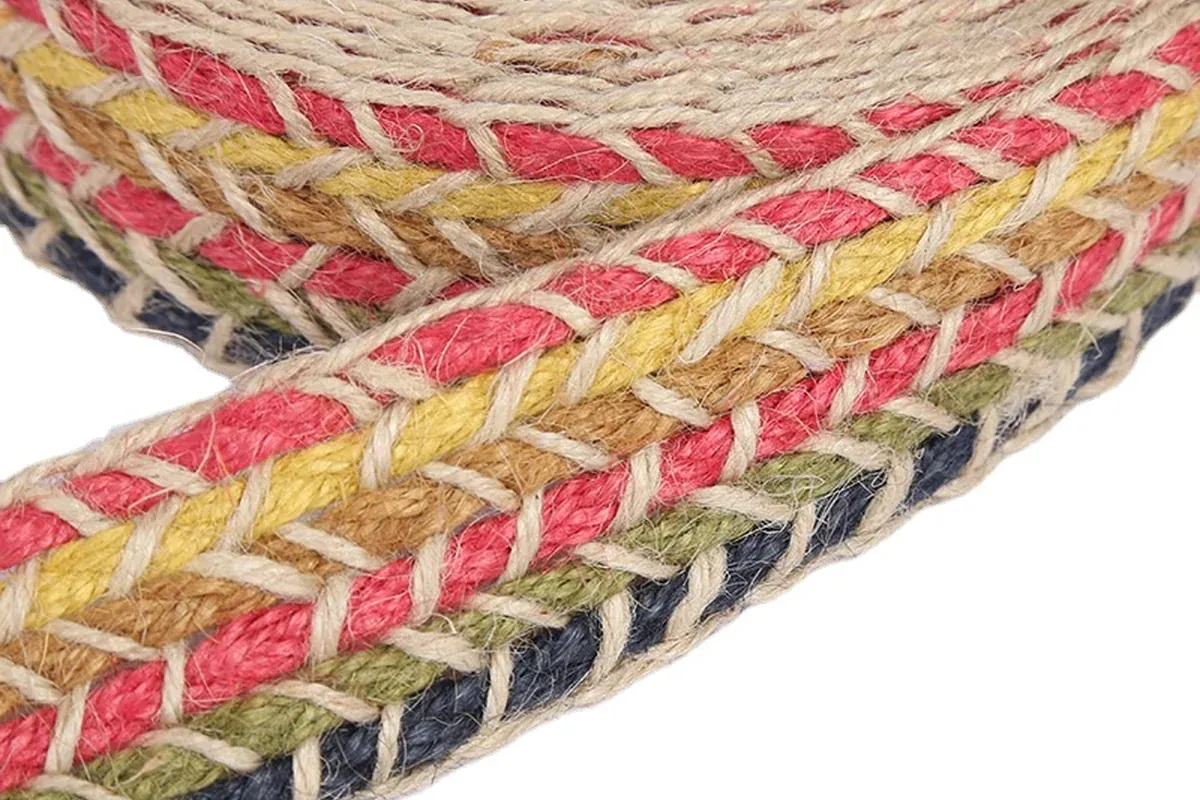
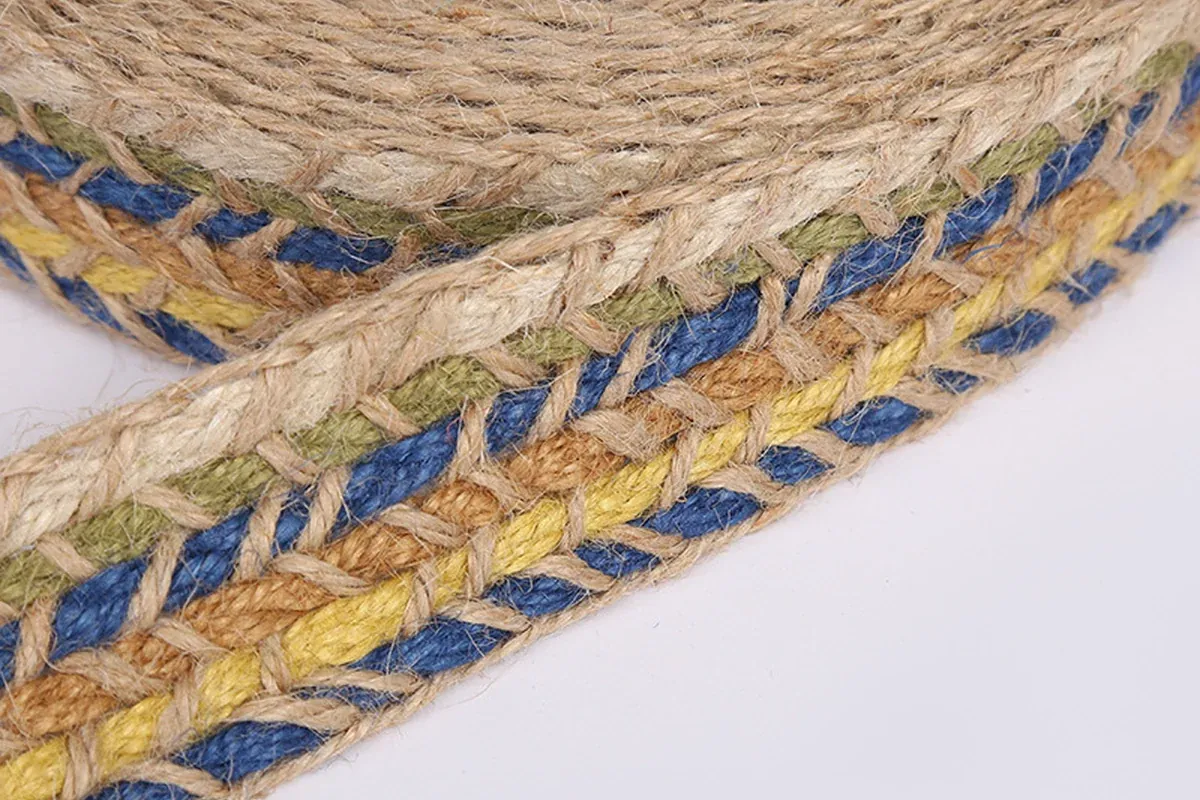
Strand colors in a braid
Each strand comes back into view as it crosses the face.
-
Alternating strands
Two colors can produce a diagonal stripe. -
Single accent
One contrasting strand draws a finer line through the braid. -
Tonal strands
Similar yarn shades bring out texture with less contrast. -
Flat face
A wider braid shows more crossings at once.
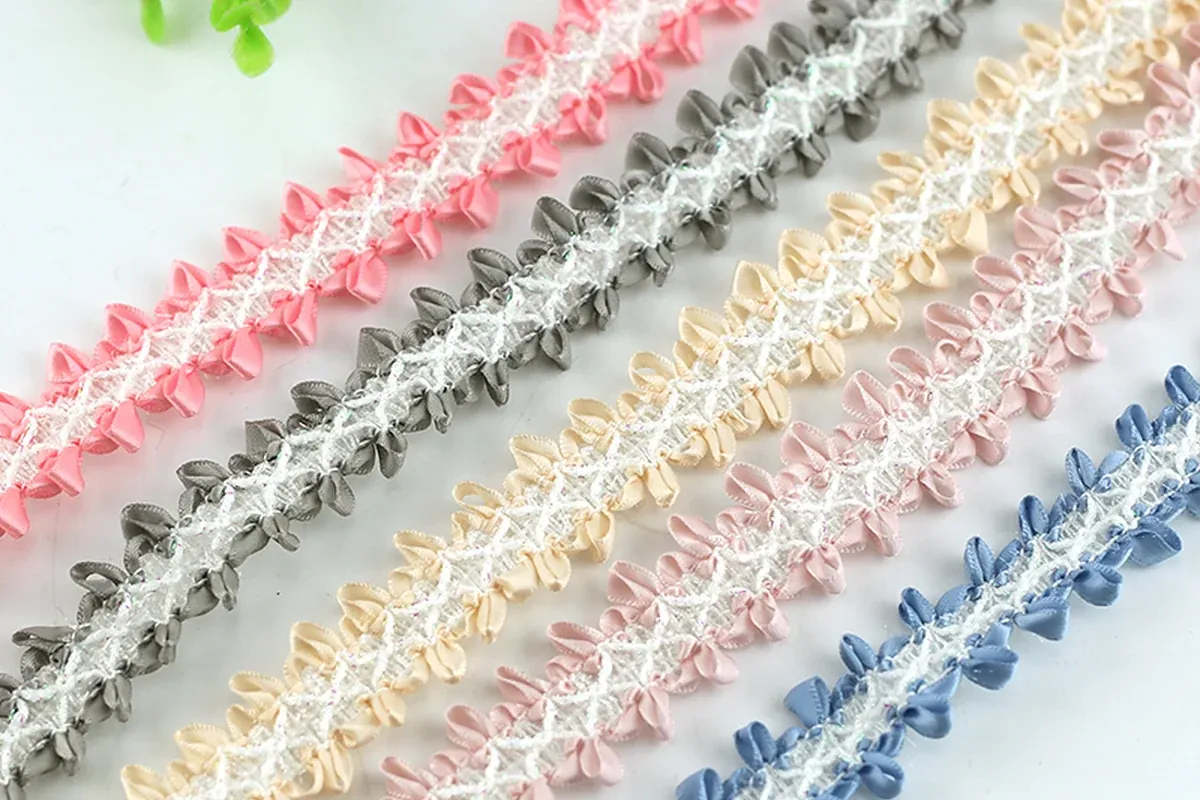
Color patterns in the braid
Strand order determines where a color reappears. Two shades can alternate or form one fine line in a mostly solid braid.
-
Single accent
One accent strand crosses the background strands. -
Alternating strands
Alternating colors form a stronger diagonal. -
Tonal mix
Close colors reveal the crossing pattern without a sharp stripe. -
Orientation
On flat trim, the seam can hide some of the colored strands.
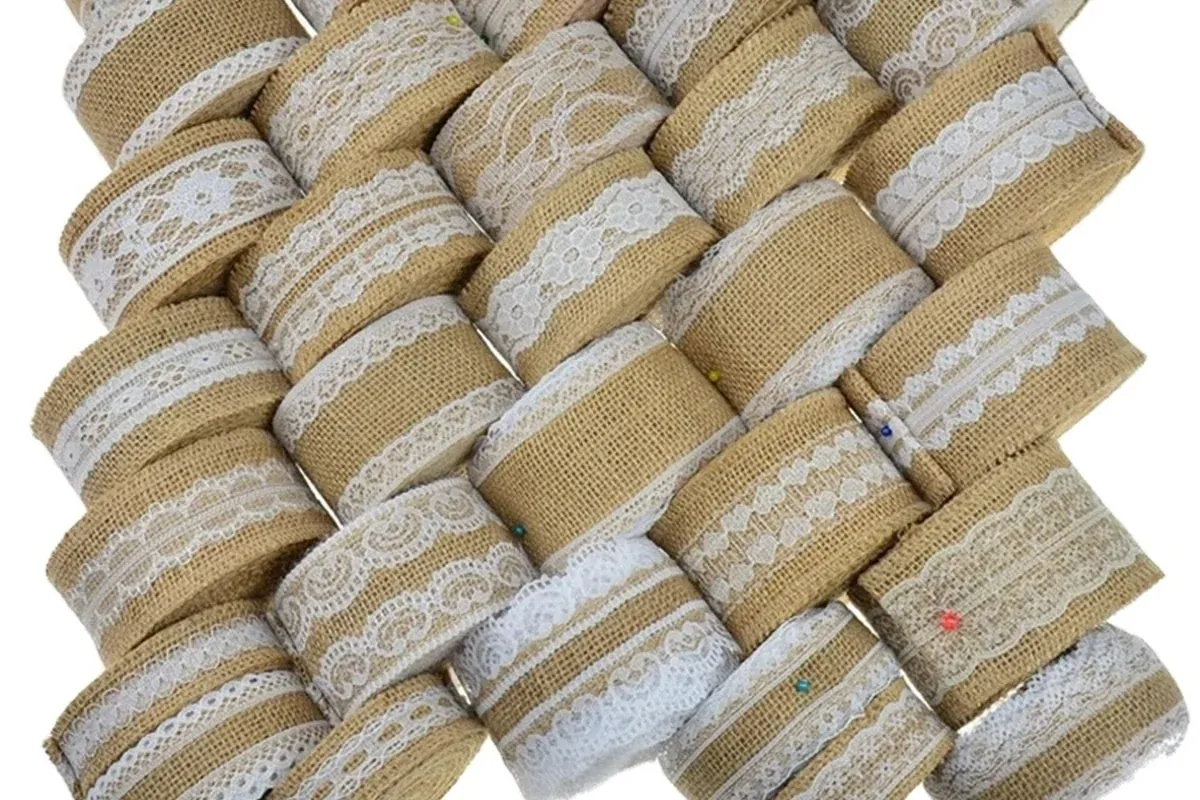
Braid in rolls and bundles
Thick braid fills a spool faster than thin flat tape.
-
Continuous trim
A roll can follow a long seam or container edge. -
Individual ties
Cut pieces can have extra length for a knot or attachment. -
Color sets
Different strand combinations can be bundled separately. -
Bundle label
Shape and color order distinguish similar braids.
Braid yarns and shapes
Fiber gives the braid its surface. Strand arrangement gives it the shape that sits against a seam or fits through hardware.
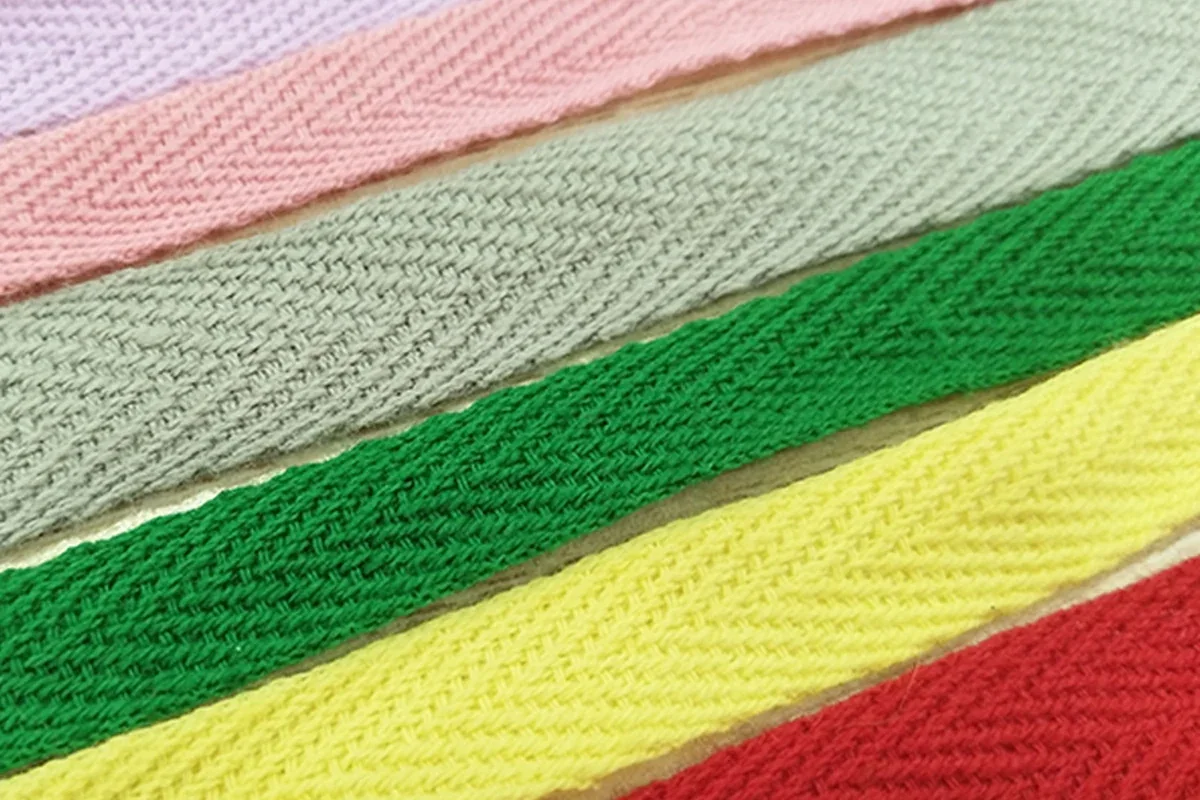
Yarn choices
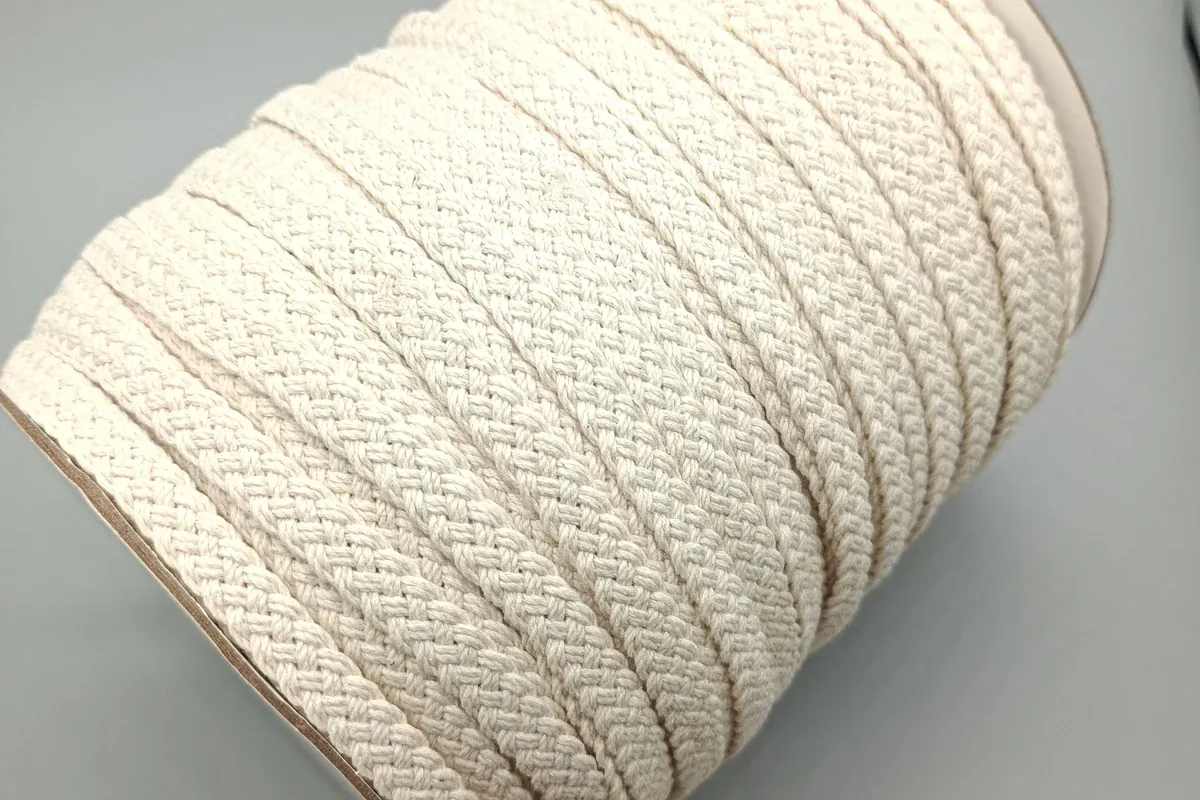
Matte cotton can form a strand in a thick braid. The same fiber can be woven into flatter twill tape.
Cotton ribbon and twill tape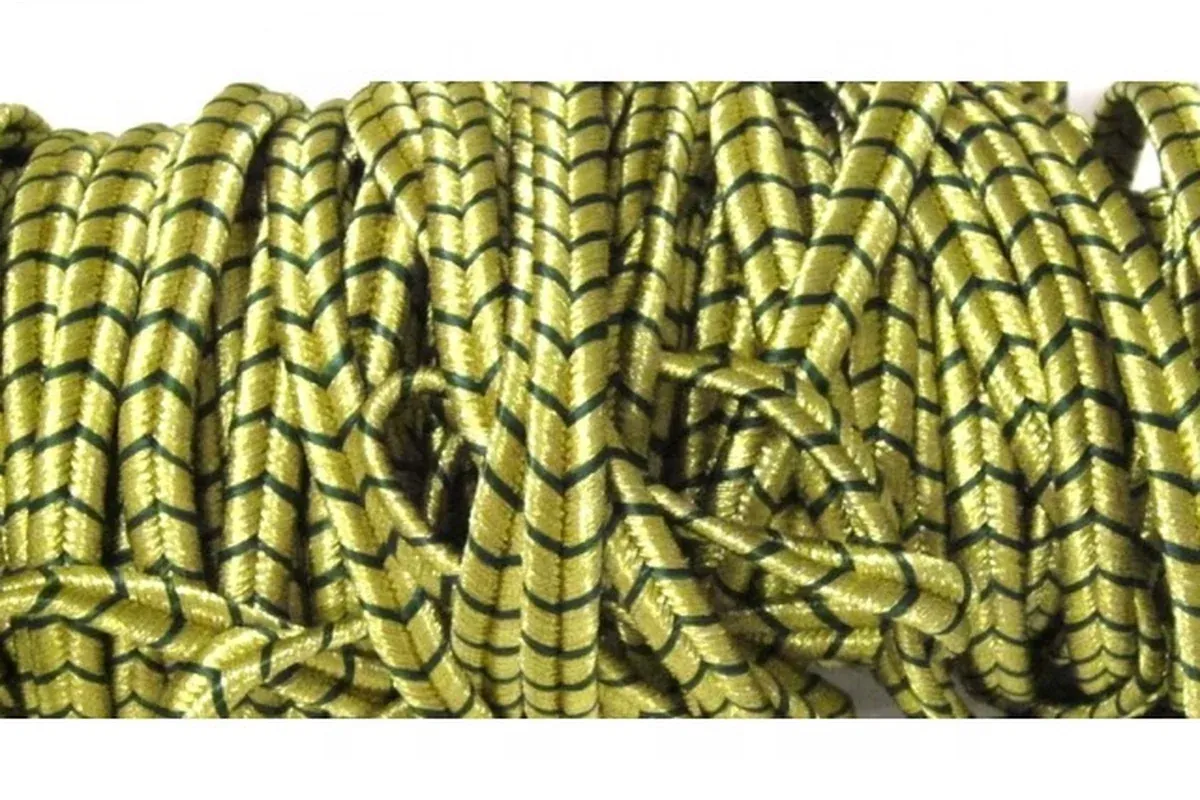
Flat or round?
Flat braid can lie close to a garment seam. Round braid adds depth to an edge or makes a cord-like tie.
Ribbon trim for sewn garments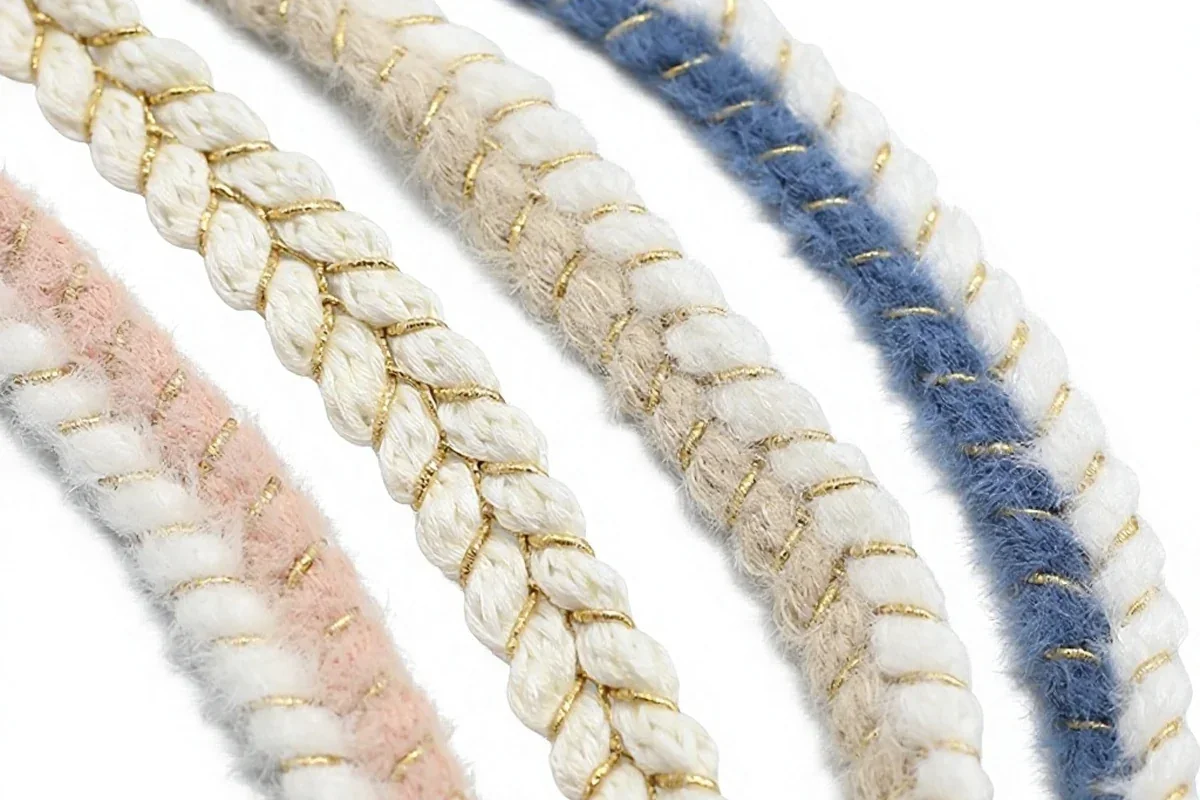
Braid beside a soft knit
Diagonal strands can give braid a firm shape. Knit loops form a more flexible band that can lie flatter on a soft garment edge.
Soft knitted trim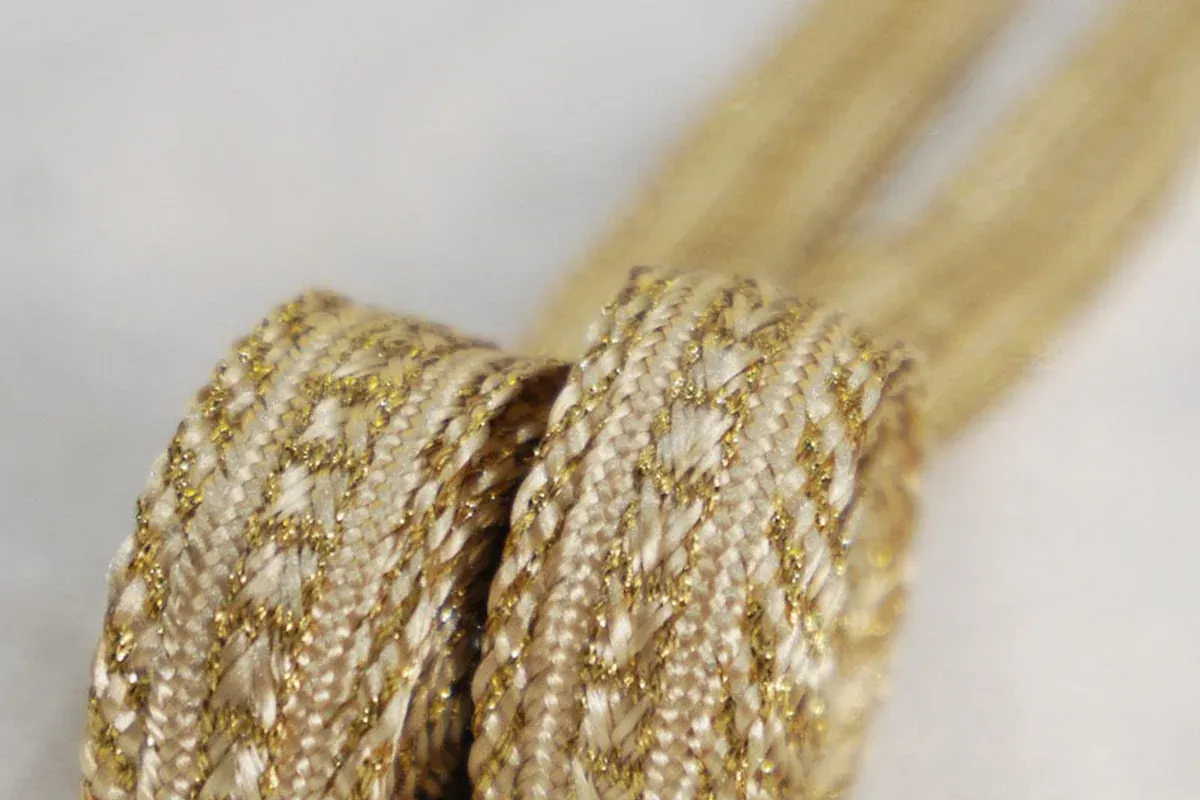
How the strands shape the braid
The strands cross in sequence to form the visible pattern. Their arrangement sets the shape, and their size affects thickness. Either can change the fit even if the colors stay the same.
A strand pattern for your trim
A short sample with one full repeat can show the shape and colors for a reorder or new design.
Discuss braided trimBraid structure and yarn options
Strand colors, cross-sections and cut or continuous braid.